
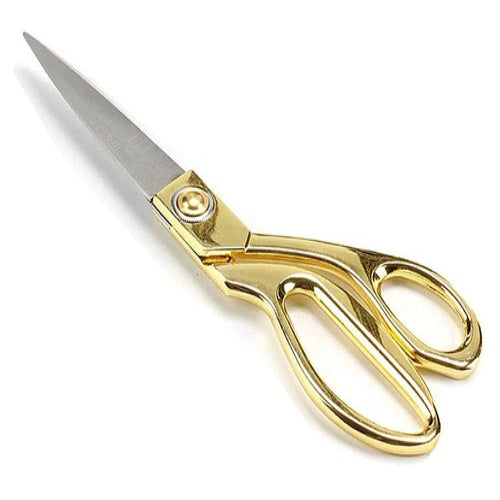
Type: General Instruments
Scissors Straight Tailor (GOLDEN HANDLE)
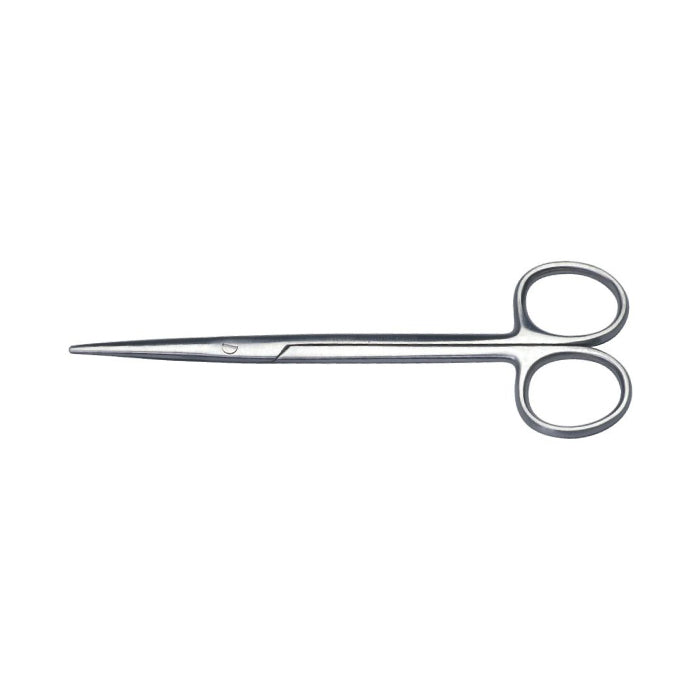
Type: General Instruments
Metzenbaum Scissor Surgical Instrument
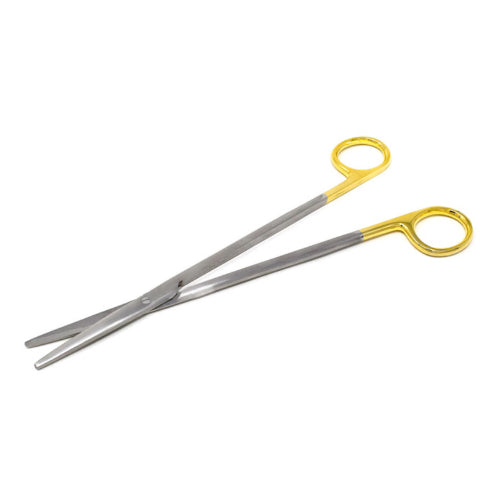
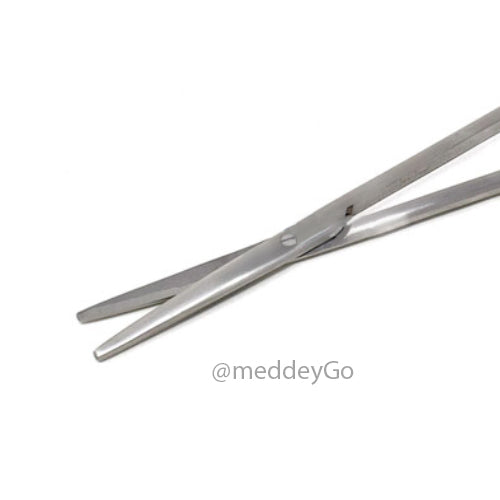
Type: Surgical Scissors
Tungsten Carbide (TC) Metzenbaum Scissor, Straight
Collection:
Metzenbaum Surgical Scissors
In your kitchen, you almost certainly have different knives for different jobs---a heavy-duty cleaver for tough vegetables, a serrated blade for bread, and a small paring knife for delicate peeling. You wouldn't use one where another is needed.
This "right tool for the right job" philosophy becomes a matter of life and death in an operating room. Surgeons navigate a complex landscape of tissues, from tough fascia to paper-thin membranes, all while working in incredibly tight spaces. A standard pair of scissors designed for general cutting would be dangerously inadequate for these varied and delicate tasks.
Enter one of the most elegant surgical cutting tools ever designed: the Metzenbaum surgical scissors. They look nothing like the scissors you'd find in a first-aid kit. With their long, graceful shanks and surprisingly short, fine tips, they are less a cutting tool and more a precision instrument.
That unique form is the key to their function. The long handles allow a surgeon's hands to remain well outside the immediate surgical area, ensuring a clear, unobstructed view. Meanwhile, the small, often curved blades give them the control to make minute, precise cuts or delicately separate tissues without damaging nearby organs. These specialized surgical scissors are the unsung heroes that make modern, minimally invasive surgery possible.

Summary
Metzenbaum surgical scissors are precision instruments with long handles and short, fine blades that enable delicate tissue dissection and safe blunt spreading while keeping the surgeon’s hands out of the field. Curved versus straight tips serve different tasks, and using them on sutures is strictly avoided—Mayo scissors handle tougher materials. Variants like extra-long Nelson-Metzenbaums and tungsten carbide–edged models enhance reach and durability, while proper tripod grip and rigorous autoclave sterilization ensure control and safety. Overall, they embody the “right tool for the right job” among specialized surgical scissor types.
Why a Scalpel Isn't Enough: The Challenge of Delicate Tissue Dissection
In surgery, getting from point A to point B isn't about just cutting a straight line. Surgeons often need to work around vital organs and blood vessels. This requires a technique called delicate tissue dissection---the careful art of separating layers of tissue rather than simply slicing through them. Think of it less like chopping vegetables and more like gently peeling a sticker off its backing without tearing it. The goal is to create a path while causing as little damage as possible.
Many internal tissues are incredibly fragile, like wet silk or the thin membrane inside an eggshell. A scalpel, which is designed for making sharp, initial incisions, is often too aggressive for this kind of work. Using one for dissection risks accidentally nicking a blood vessel or tearing a fragile organ wall. It's the wrong tool for a job that demands finesse over force, creating a need for something more specialized than a simple blade.
This is precisely why one tool can't do it all. Using scissors designed for cutting tough stitches on delicate organs would be like trying to perform calligraphy with a paint roller---clumsy and destructive. A surgeon needs an instrument that can both gently spread tissues apart and make tiny, controlled snips only when needed. This is exactly what Metzenbaum scissors are used for . They are true dissection scissors, built for precision in the most sensitive environments.
"Metz, Please": Who Was Metzenbaum and Why Do Surgeons Say His Name?
The name on these famous scissors isn't a corporate brand, but a tribute to the person who invented them. Dr. Myron Firth Metzenbaum was an innovative American surgeon in the early 20th century who, like many surgeons of his era, found himself needing a tool that simply didn't exist. Faced daily with the challenge of delicate dissection, he wasn't content with the clumsy, oversized instruments available at the time. He needed something with more finesse.
As a specialist in surgery of the face, nose, and throat, Dr. Metzenbaum worked in areas where a single misplaced millimeter could damage a nerve or create a visible scar. The standard surgical scissors of his day were often too bulky and heavy for such precise operations. Frustrated by these limitations, he designed his own: a pair of scissors with exceptionally long, slender handles and very short, delicate blades, perfect for reaching into tight spaces while allowing a clear view of the surgical site.
His invention was so effective that its use quickly spread from facial surgery to nearly every other surgical field. The tool became a staple, and today, when a surgeon calls for "Metz," they are honoring the legacy of a problem-solver. It's a powerful reminder that many entries in a surgical instrument identification guide exist because a surgeon once thought, "There has to be a better way." This elegant solution wasn't an accident; it was a masterclass in functional design.
The Genius of the Design: Why Long Handles and Short Blades Are a Surgeon's Best Friend
At first glance, Metzenbaum scissors look almost unbalanced, with their disproportionately long handles and tiny cutting tips. This unique shape, however, isn't an accident; it's the very source of their surgical superpowers. The specific relationship between the handle length and the blade length---what engineers call the shank-to-blade ratio---is deliberately designed to give a surgeon two critical advantages: a clear view and ultimate control.
The long, slender handles serve a brilliant purpose. Imagine an artist trying to paint a tiny detail on a canvas; they often hold the brush far from the tip to prevent their own hand from blocking their line of sight. Metzenbaum scissors work on the same principle. The extended handles allow a surgeon's hands to stay well outside the immediate surgical area, providing an unobstructed view, which is essential when working deep inside the body or in a tight space.
While the handles provide reach and visibility, the short, delicate blades provide unparalleled precision. This design gives the surgeon a high degree of mechanical advantage, meaning a small, steady movement of their fingers translates into an even smaller, more exact snip at the tip. Think of the fine control you get from tweezers versus the clumsy power of pliers. The short blades ensure that only the intended tissue is cut, minimizing the risk of accidentally nicking a nearby nerve or blood vessel.
This perfect partnership between handle and blade is what makes the Metzenbaum such a masterful surgical instrument for delicate work. The design ensures a surgeon has both the reach to get to the problem and the precision to solve it safely. But the tool's specialization doesn't stop there. The very tip of the blades holds another key to its function, depending on whether it's curved or straight.

Curved vs. Straight: Choosing the Right Tip for the Job
The specialization of a Metzenbaum scissor doesn't stop with its long handles and short blades. If you look closely at the very tip, you'll find another critical design choice: the blades are either curved or straight. This isn't a matter of style, but a functional decision a surgeon makes based on the specific challenge they face inside the body. The shape of the tip directly impacts how the surgeon can approach and interact with delicate tissues.
A curved Metzenbaum is often the default choice for dissection. Think about trying to cut something wrapped around a ball---a straight blade is awkward, but a curved one can follow the contour perfectly. This is precisely how curved dissecting scissors function. The gentle arc allows a surgeon to "peek" around a blood vessel or organ, keeping the sharp points away from vital structures while making a precise snip. Straight-tipped scissors, on the other hand, are perfect for making clean, straight-line cuts on more accessible tissue or for neatly trimming sutures.
- Curved Tips: Ideal for navigating around an organ or vessel to dissect tissue safely.
- Straight Tips: Best for making precise, straight cuts on flat or surface-level tissue.
This simple distinction highlights the immense level of detail required in surgery, where even the slightest curve of a tool can be the key to a safer procedure. But perhaps the most skillful use of these scissors involves not cutting at all. In a technique that seems counterintuitive, surgeons often rely on the smooth, outer edge of the blades to gently separate tissues.
The Art of "Blunt Dissection": How Metzenbaums Separate Tissue Without Cutting
It sounds strange to use scissors for anything but cutting, but in surgery, this is a common and vital technique. This method is called blunt dissection, and it's a perfect example of surgical finesse. Imagine trying to gently pull apart a cotton ball with your fingers instead of ripping it; you're not breaking the fibers, but finding the natural lines of separation. Surgeons use Metzenbaum scissors to do something very similar inside the human body, relying on the tool's design for safety rather than sharpness.
- To perform blunt dissection, a surgeon inserts the closed, blunt-tipped operating scissors into a plane of tissue.
- Then, by slowly opening the handles, the blades spread apart, gently stretching and nudging the tissue layers away from each other.
- This action delicately separates membranes and muscle fibers without the risk of an errant snip.
- The smooth, rounded outer edges of the Metzenbaum are specifically designed to perform this task without tearing or causing unnecessary trauma to the surrounding area. It's a technique that relies more on pressure and spreading than on a sharp edge.
This careful approach is fundamentally safer than just cutting ahead. By separating tissues this way, surgeons can identify and protect tiny, often hidden, blood vessels and nerves that lie between the layers. It's a way to explore the anatomy and create a safe path before making a decisive cut. While Metzenbaums are the artists' tools for this delicate work, surgery often requires more brute force. For tougher materials, surgeons need the equivalent of a gardener's shears, leading them to reach for the Metzenbaum's robust cousin: the Mayo scissor.
Metzenbaum vs. Mayo Scissors: The Gardener's Shears and the Artist's Snips
While Metzenbaums are the delicate instruments for separating tissue, surgery isn't always so gentle. For the tougher jobs, surgeons need a tool with more muscle. Enter the Mayo scissors, the workhorse of the operating room. Instantly recognizable by their heavier, stockier build compared to the slender Metzenbaums, Mayo scissors are designed for powerful cutting, not necessarily for finesse.
Mayo scissors are built to cut through dense, tough materials that would easily dull or damage the fine blades of a Metzenbaum. This includes cutting sutures (stitches) and a resilient tissue called fascia---a strong, fibrous sheet that wraps around muscles and organs much like the tough, silvery skin on a cut of meat. Think of Mayos as the surgical equivalent of powerful kitchen shears; they provide the force needed for these less delicate tasks.
The difference is best captured with a simple analogy. Mayo scissors are the gardener's shears, perfect for clipping thick stems and tough branches. Metzenbaum scissors, in contrast, are the artist's tiny snips, used for carefully cutting a single, delicate thread without disturbing the rest of the canvas. Each is essential, but using one for the other's job would lead to either a ruined tool or a clumsy, potentially dangerous, result.
This strict division of labor in the operating room is critical for both patient safety and the longevity of the instruments. It also raises a very specific, practical question for surgical teams. Given that Mayo scissors are the designated tool for cutting sutures, what happens if you break the rules?

The Suture Question: Should You Ever Cut Stitches with Metzenbaum Scissors?
Given the sharp divide in purpose, the answer is a resounding and absolute no. In any operating room, using delicate Metzenbaum scissors to cut sutures is considered a cardinal sin. This isn't just a matter of preference; it's a critical rule for maintaining the integrity of the tool. Using Metzenbaums for a job they weren't designed for would be like using a fine chef's knife to pry open a can---it might work once, but you'll ruin the precision blade in the process.
The reason for this strict rule lies in the suture material itself. While it may look like simple thread, modern sutures are engineered to be incredibly strong and are often braided or coated, making them surprisingly abrasive. Forcing the fine, thin blades of a Metzenbaum through this tough material creates microscopic nicks and dulls the edge almost instantly. It's the equivalent of cutting a silk scarf with scissors you just used on sandpaper; they will never cut as smoothly again.
Ultimately, keeping Metzenbaums away from sutures is about preserving their ability to perform delicate dissection flawlessly for the next patient. A dull or nicked blade can crush or tear fragile tissue instead of cutting it cleanly, creating unnecessary trauma. This strict discipline highlights a core principle of surgery: having the perfect tool, in perfect condition, for every single step. This dedication to specialization is so important that it has even led to further variations on these essential scissors.
Beyond the Basics: What are Nelson-Metzenbaum Scissors?
That dedication to having the perfect tool for a specific job has led to even more specialized designs. Among the different surgical scissors types, one of the most common variations is the Nelson-Metzenbaum, a modification created to solve the unique challenges of working deep inside the chest cavity. While they share the same purpose of delicate dissection, they are adapted for an entirely different environment.
These are the go-to scissors for thoracic surgery---that is, any procedure involving the chest, heart, or lungs. Imagine trying to work carefully in the narrow, deep space between a patient's ribs. Standard Metzenbaums might not be long enough to reach the target tissue while keeping the surgeon's hands clear of the small opening. This specific problem is exactly what the Nelson-Metzenbaum was designed to overcome.
The key difference, then, is their length. Nelson-Metzenbaums are essentially extra-long surgical scissors, featuring significantly extended shanks while keeping the same small, delicate blades. This simple but brilliant adjustment allows a surgeon to navigate around the rib cage and perform the same precise cutting on a lung or heart that standard Metzenbaums perform in the abdomen. But the evolution of these tools doesn't stop at length; sometimes, the very material of the blade gets a major upgrade.
Golden Handles Mean a Sharper Edge: The Secret of Tungsten Carbide
As these tools evolve, so do the materials they're made from. If you look closely at instruments in an operating room, you might notice a subtle code: some have gold-plated rings on their handles. This isn't for decoration. It's a visual signal to the entire surgical team that these aren't just standard steel scissors; they have a high-performance upgrade built right into their blades.
That golden glint signifies that the blades are enhanced with Tungsten Carbide (TC), an extremely hard material. Think of it like a world-class chef's knife that almost never seems to get dull. Instead of making the entire tool from this dense, brittle material, manufacturers micro-bond a razor-thin TC edge onto the surgical metzenbaum scissors' standard steel blades. This gives the instrument the best of both worlds: the familiar feel and strength of steel with a cutting edge that stays sharp far longer than steel alone ever could.
For a surgeon, this durability is a game-changer. A perpetually sharp edge allows for cleaner, more precise cuts with less force, which is why TC models are often considered the best scissors for fine tissue surgery. This feature not only helps minimize tissue trauma during a procedure but also dramatically extends the instrument's working life, making it a reliable and essential part of the surgical toolkit. Of course, possessing such a precise tool is only half the battle; using it with maximum control is just as critical.
How Surgeons Hold "Metz": The Proper Grip for Maximum Control
To achieve that level of control, surgeons can't just hold scissors the way we do at home. Think about how you cut wrapping paper: you likely slide your thumb and middle finger deep into the rings for leverage. While that works for big, straight cuts, it's surprisingly clumsy for the delicate work inside the human body. That everyday grip sacrifices fine motor control for power---the exact opposite of what's needed for precise tissue handling.
- Instead, surgeons learn a specific technique for holding and handling dissecting scissors known as the "tripod grip."
- They place the very tips of their thumb and ring finger into the rings, resting their index finger along the shank of the instrument toward the hinge.
- This creates a stable, three-point hold, much like a tripod holding a camera steady.
- This grip prevents wobbling and, more importantly, allows the surgeon to rotate the instrument with tiny, fluid movements of their fingertips, granting them exceptional accuracy.
Mastering this grip is a fundamental skill that transforms the scissors from a simple cutting device into an extension of the surgeon's own hands. It's a perfect example of how technique is just as crucial as technology. Of course, the world's most precise tool is useless if it isn't perfectly clean, which is why the processes for sterilization are just as rigorous as the training itself.
Keeping Patients Safe: How Metzenbaum Scissors Are Cleaned and Sterilized
After any surgery, a Metzenbaum surgical scissor isn't just washed---it must be made completely free of all living microorganisms. This process, known as sterilization , is a non-negotiable rule in medicine. It ensures that no harmful germs can be passed from one patient to another. Achieving this absolute level of cleanliness requires both a special process and instruments tough enough to survive it, which is where surgical instrument care becomes critical.
The secret to how to sterilize surgical tools is a machine called an autoclave. You can think of it as a highly advanced, medical-grade pressure cooker. Inside, the scissors are subjected to high-pressure steam at a temperature hot enough to destroy any and all microbes---including resilient bacteria and viruses that simple washing would leave behind. This intense process guarantees the instrument is pristine and safe for the next procedure.
This harsh cycle is precisely why Metzenbaum scissors are crafted from high-grade stainless steel. Unlike the metal in your kitchen drawer, this material is designed to endure thousands of rounds in the autoclave without rusting, warping, or losing its critical sharpness. While these scissors are the go-to for delicate work, surgeons often need different designs for tougher jobs, leading to a whole family of specialized surgical scissors.
Beyond Metzenbaum: What Are the Other Types of Surgical Scissors?
While Metzenbaum scissors are the go-to for delicate internal work, a surgeon's tray is filled with other specialists. Think of it less like a drawer of random utensils and more like a chef's knife roll---every single tool has a distinct purpose. This variety in surgical scissors types ensures that for every unique task, from cutting tough material to snipping a single thread-like vessel, there is an instrument designed for perfect performance and patient safety.
Expanding beyond the familiar Metzenbaum and Mayo scissors reveals an even greater degree of specialization. Each of these surgical cutting tools is built to solve a specific problem:
- Iris Scissors: Originally designed for intricate eye surgery, these are extremely small and fine-tipped, perfect for making tiny, precise cuts in the most delicate areas.
- Tenotomy Scissors: Similar to Iris scissors but with long handles, they allow surgeons to make controlled cuts on sensitive structures like tendons or nerves deep within a surgical site.
- Bandage Scissors: These have a blunt, flattened tip on the lower blade. This clever design allows the blade to slide safely between a bandage and the skin without any risk of accidentally cutting the patient.
From the robust Mayo scissors used for heavy tissue to the needle-fine tips of Iris scissors, this family of instruments highlights a core principle of surgery: precision is everything. Understanding the different types of surgical scissors and their uses shows that there is no "one-size-fits-all" solution. Instead, every cut is considered, and the right tool is always chosen for the job.
From Simple Tool to Precision Instrument
What may at first seem like a simple cutting tool is, in reality, a story of purpose-driven design. The long, slender body of Metzenbaum scissors is not an accident; it's the key that gives surgeons a clear view deep inside the body, allowing the short, fine blades to work with incredible precision. This is the difference between the simple act of cutting and the surgical art of delicate dissection.
The most critical procedures often involve carefully separating tissues rather than just slicing through them, a task that elevates these tools from mere cutters to essential scissors for dissection . They are among the most important delicate tissue dissection instruments available, designed for finesse over force. So, the next time you watch a medical drama and hear a surgeon call for "Metz," you'll know exactly what they're asking for, why they need it, and the incredible level of artistry and precision it represents.
Metzenbaum Surgical Scissors Q&A
Question: What sets Metzenbaum surgical scissors apart, and what are they used for?
Short answer: Metzenbaum scissors have long, slender handles and short, fine tips designed for delicate tissue dissection and safe blunt spreading. Their shape keeps the surgeon’s hands out of the field for a clear view while translating tiny finger movements into ultra-precise cuts, making them ideal for working around fragile structures during minimally invasive procedures.
Question: Curved vs. straight tips—how do I choose?
Short answer: Curved Metzenbaums are typically the go-to for dissection because their arc lets surgeons follow contours and “peek” around vessels or organs safely. Straight tips are best for clean, straight cuts on accessible, flatter tissue. Even with straight-tipped Metzenbaums, avoid cutting sutures—use Mayo scissors for that task.
Question: How do Metzenbaums perform blunt dissection without cutting?
Short answer: The surgeon inserts the closed, blunt-tipped blades into a natural tissue plane and gently opens them to spread layers apart. This controlled pressure separates tissues along their seams while the smooth, rounded outer edges minimize trauma and help expose hidden vessels and nerves before any sharp cutting is done.
Question: Why shouldn’t you cut sutures with Metzenbaums, and what should you use instead?
Short answer: Suture materials are tough and abrasive; cutting them quickly nicks and dulls the Metzenbaum’s fine edges, compromising future delicate dissection. Use Mayo scissors—the heavier, more durable “workhorse” designed for sutures and tougher tissues like fascia—to protect both patient safety and instrument longevity.
Question: What notable variants or upgrades exist (e.g., Nelson-Metzenbaum, tungsten carbide)?
Short answer: Nelson-Metzenbaums are extra-long versions tailored for deep, narrow spaces such as the chest in thoracic surgery, maintaining delicate tips with extended reach. Models with gold handle rings indicate tungsten carbide–edged blades, which hold a sharper edge far longer than standard steel for cleaner cuts and greater durability.