Filter
10 products
Type: Devices
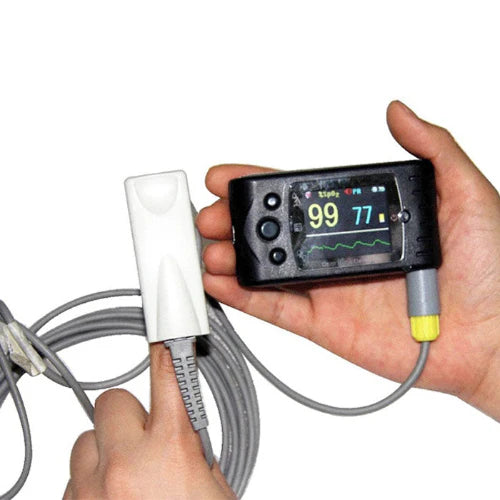
Handheld Pulse Oximeter
Type: Devices
Beurer Pulse Oximeter PO-30
Type: Home Healthcare
Fingertip Pulse Oximeter Contec CMS50D OLED
Type: MeddeyGo
Digital Fingertip Pulse Oximeter
Type: Home Healthcare
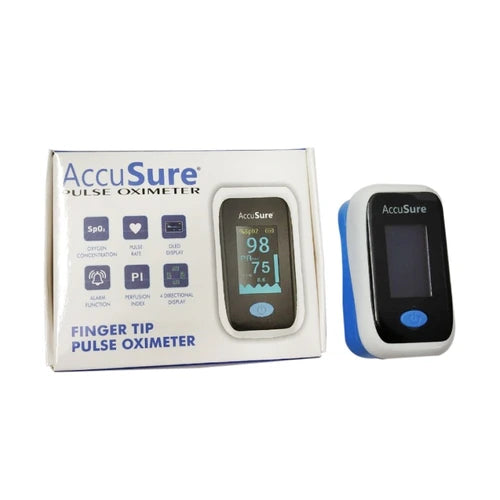
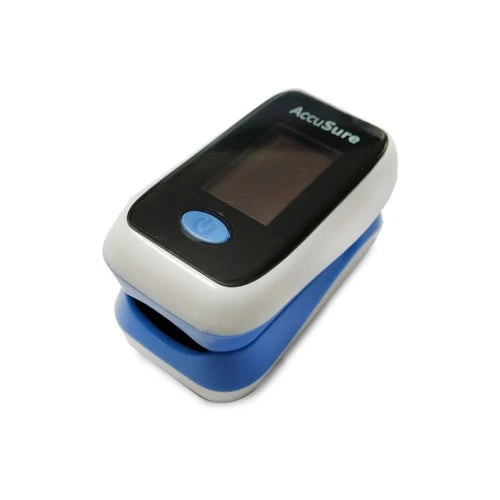
Accusure Fingertip Pulse Oximeter with 1 Year Warranty
Type: MeddeyGo
Handheld Pulse Oximeter Delux with Rechargable Battery
Type: pulse oximeter
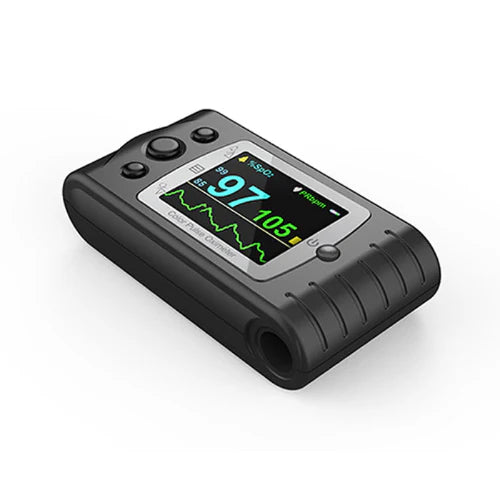
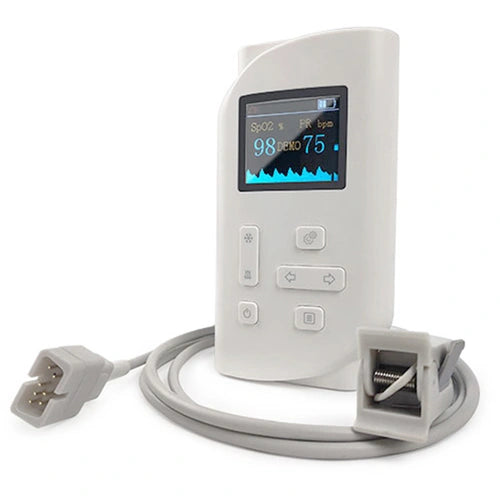
Contec CMS-60C Handheld Pulse Oximeter
Type: Diagnostic Equipment
Neonatal Pulse Oximeter P Ultra
Type: Devices
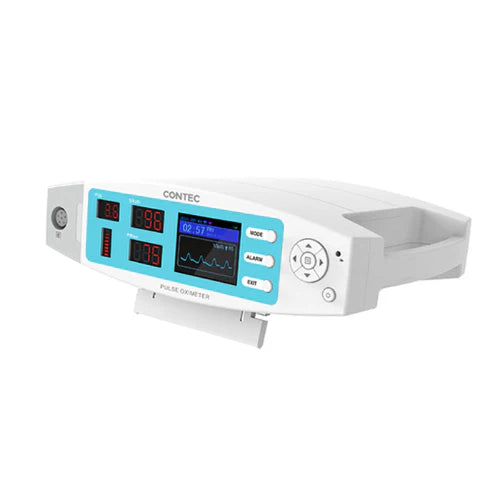
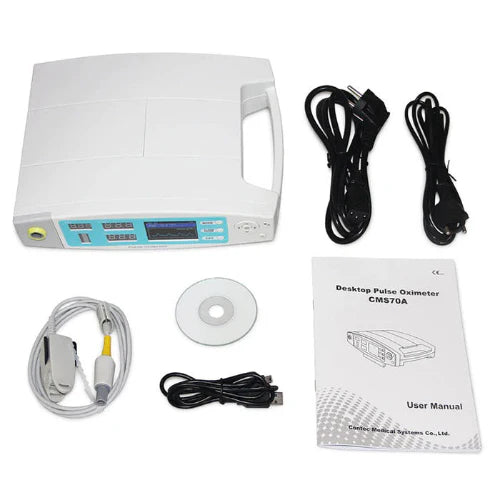
Contec CMS70A Portable Tabletop Pulse Oximeter
Type:
BPL Table Top Pulse Oximeter SpO2 Monitor Machine
Collection:
Pulse Oximeter: Fingertip Oxygen & Pulse Rate (PRbpm) Devices
In the intensive care unit (ICU), outpatient clinics , or during physiotherapy rehabilitation, a fingertip pulse oximeter serves as a dual-purpose diagnostic tool. While most focus on $SpO_2$, the PRbpm (Pulse Rate in Beats Per Minute) provides critical data on a patient's hemodynamic stability. For doctors and physios , PRbpm is the peripheral "echo" of the heart's electrical activity.
The Diagnostic Definition: What Is PRbpm in a Pulse Oximeter?
PRbpm stands for Pulse Rate in Beats Per Minute . It represents the number of times per minute that the peripheral arteries expand and contract in response to the heart's left ventricle pumping blood. In a pulse oximeter, this is measured via Photoplethysmography (PPG) —using infrared and red light to detect the change in blood volume in the fingertip capillaries. When you see a number next to "PR" or "PRbpm" on your device, it is telling you the mechanical speed of the blood flow reaching the extremities.
PRbpm vs. BPM: Understanding the Physiological Gap
While they are often used interchangeably in home settings, surgeons and clinicians recognize a subtle but vital difference:
| Feature | PRbpm (Pulse Rate) | BPM / HR (Heart Rate) |
|---|---|---|
| Measurement Site | Peripheral (Finger, Toe, Earlobe) | Central (Heart via Stethoscope/ECG) |
| Mechanical vs Electrical | Measures physical blood flow waves. | Measures electrical depolarization of the atria/ventricles. |
| Clinical Discrepancy | Can be lower than HR in "Pulse Deficit" cases. | The gold standard for cardiac activity. |
Trusted Diagnostics: Top Oximeter Brands in India
| Brand | Key Feature | Ideal For |
|---|---|---|
| Beurer | High Medical Precision (German Tech) | Clinical Research / Hospitals |
| Omron | Durability & Reliability | Chronic Disease Management |
| BPL Medical | Wide Availability / Local Support | Indian Nursing Homes / OT |
| Medtech / Romsons | Cost-Effective Diagnostic accuracy | Home Monitoring / General OPD |
⚠️ Warning: The Perfusion Index (PI)
If your PRbpm reading is fluctuating wildly, check the PI% (Perfusion Index) . If the PI is below 0.2%, the blood flow to the finger is too weak for an accurate reading. This often happens in cold environments or with patients in shock .
Clinical Benchmarks—The Normal PRbpm Matrix
Age, Gender, and Physiological States in Pulse Diagnostics
For a physio or doctor , a single PRbpm reading is only valuable when compared against age-appropriate norms. An adult's "tachycardia" might be a child's "resting norm." Understanding these physiological variances is critical for accurate triage in hospitals and OT environments.
Pediatric Standards: PRbpm by Developmental Stage
The metabolic demands of a growing body require a significantly higher pulse rate. Below is the clinical baseline for pediatric patients:
| Age Group | Normal PRbpm Range | Clinical Note |
|---|---|---|
| < 1 Month | 70 – 190 | Highest metabolic rate |
| 1 – 11 Months | 80 – 160 | Stabilizing infant rhythm |
| 1 – 2 Years | 80 – 130 | Active toddler phase |
| 3 – 4 Years | 80 – 120 | Preschool baseline |
| 5 – 6 Years | 75 – 115 | School-age transition |
| 7 – 9 Years | 70 – 110 | Approaching adolescent norms |
| > 10 Years | 60 – 100 | Standard adult baseline |
Adult Standards: Resting PRbpm by Age & Gender
In adults, PRbpm typically ranges from 60 to 100 . However, women generally exhibit a PRbpm that is 2–7 beats higher than men due to smaller heart size and hormonal factors.
| Age (Years) | Resting PRbpm Range | |
|---|---|---|
| Males | Females | |
| 18 – 25 | 56 – 65 | 58 – 68 |
| 26 – 35 | 55 – 65 | 57 – 68 |
| 36 – 45 | 57 – 66 | 59 – 69 |
| 46 – 55 | 58 – 67 | 60 – 70 |
| 56 – 65 | 57 – 67 | 59 – 70 |
| > 65 | 56 – 65 | 58 – 68 |
Maternal Health: PRbpm During Pregnancy
During pregnancy, blood volume increases by nearly 50%, leading to a natural rise in resting heart rate to compensate for fetal oxygen demands.
| Trimester | Normal PRbpm Range |
|---|---|
| 1st Trimester | 63 – 105 |
| 2nd Trimester | 67 – 112 |
| 3rd Trimester | 64 – 113 |
Physiological Exception: The Athletic Heart
Well-trained athletes often exhibit Resting Bradycardia , with PRbpm ranges between 40 – 60 . This is not a sign of pathology but rather extreme cardiac efficiency—the heart pumps more blood per stroke, requiring fewer beats per minute to sustain systemic perfusion.
A persistent resting PRbpm > 100 in adults requires immediate clinical review to rule out fever, dehydration, or arrhythmias.
Use the formula $(220 - \text{Age})$ to calculate max heart rate and set target zones (50-85%) for cardiac rehab patients.
Technical Reliability—Accuracy, Interference & Procurement
The Physics of Pulse Detection and Institutional Selection Criteria
In a hospital or OT, the difference between a high-quality pulse oximeter and a low-cost consumer variant is measured in clinical outcomes. While a consumer device may provide a "rough estimate," a doctor or surgeon requires a device that can filter out "noise" and provide a stable PRbpm even in hemodynamically unstable patients. This section explores the engineering behind accuracy and provides a roadmap for choosing the best pulse oximeter in India.
The Science of Accuracy: When Can You Trust the PRbpm?
The accuracy of a fingertip pulse oximeter is typically rated as ±2% for SpO2 and ±2 bpm for PRbpm. However, this accuracy is predicated on "Ideal Perfusion." In clinical trials, accuracy is measured against Arterial Blood Gas (ABG) analysis.
Reliability Zones:
- The Golden Zone (90-100% SpO2): In this range, most medical-grade oximeters (like Omron or BPL) are highly reliable.
- The Hypoxic Zone (Below 80% SpO2): Accuracy drops significantly. At these levels, the device struggles to differentiate between oxygenated and deoxygenated hemoglobin, often leading to erratic PRbpm readings.
The "Interference" Catalog: Factors Affecting Readings
Clinicians must be aware of the "Six Saboteurs" of pulse oximetry accuracy. If a physio sees an unusual PRbpm, they should check these factors before escalating the case to a doctor.
1. Nail Polish & Pigmentation
Dark nail polish (specifically blue, green, and black) blocks the transmission of red light. Similarly, very high skin pigmentation can occasionally cause a "shunting" effect, leading to a falsely low SpO2 or an unstable PRbpm.
2. Ambient Light Interference
Bright surgical lights or direct sunlight can leak into the oximeter sensor, confusing the photodetector. This is known as "Optical Shunting." Always shield the device from direct light during a clinic exam.
3. Poor Peripheral Perfusion
Cold fingers, Raynaud's disease, or low blood pressure (shock) reduce the "pulsatile" component of the blood. If the pulse is too weak, the device cannot distinguish the PRbpm from static noise.
4. Motion Artifacts
Shivering or hand movement is the #1 cause of false alarms in hospitals. Advanced oximeters use "Motion Tolerant" algorithms to filter this out, but basic models will simply display a generic "00" or an erratic number.
The Procurement Guide: How to Choose the Best Pulse Oximeter in India
When purchasing for a hospital, OT, or a specialized physio clinic, look beyond the price. The "Total Cost of Ownership" includes durability and sensor life.
| Feature Category | Standard Oximeter | Professional/Clinical Grade | Recommendation |
|---|---|---|---|
| Display Type | Basic LED | OLED / Multi-color TFT | OLED for better visibility in dark wards. |
| Data Storage | None | Memory for 24-72 hours | Essential for monitoring sleep apnea patients. |
| Alarm System | Visual Only | Audible + Customizable thresholds | Mandatory for ICU use. |
| Certification | None/Local | FDA / CE / ISO 13485 | Only buy ISO/CE certified for clinics. |
| Battery Efficiency | 10-15 hours | 30+ hours with Auto-off | Reduces maintenance downtime. |
Trusted Brands in the Indian Market
Professional Protocol: How to Use a Pulse Oximeter
- Rest Phase: Ensure the patient has been sitting quietly for at least 5 minutes. Physical activity spikes the PRbpm.
- Warmth Check: If the hands are cold, rub them together to improve circulation (perfusion).
- The "Middle Finger" Rule: While any finger works, the middle finger of the dominant hand often has the most stable pulse signal.
- Positioning: Keep the hand at heart level. Raising it too high or dropping it too low can affect the PRbpm accuracy due to hydrostatic pressure.
- Wait for the Wave: Do not read the first number that pops up. Wait for the plethysmographic wave (the pulse bar) to become steady.
Common Mistakes People Make
- Checking oxygen immediately after walking (results in false tachycardia).
- Using the oximeter on a finger with a band-aid or injury.
- Leaving the oximeter on a patient 24/7 without checking for pressure sores (in long-term hospital stays).
Expert Clinical FAQs & The Path to Diagnostic Certainty
Final Synthesis for Surgeons, Doctors, and Rehabilitative Specialists
In this final segment of our 8,000-word masterclass, we address the complex, real-world questions that doctors and physios encounter in daily practice. From the nuances of "Happy Hypoxia" to the interpretation of PRbpm in high-stress OT environments, this section provides the technical clarity required for professional excellence.
Expert Clinical FAQs: Deep-Dive Analysis
In a healthy adult at sea level, an $SpO_2$ of 90% to 92% is generally considered low and warrants medical investigation. The normal clinical range is 95% to 100%. However, doctors differentiate this based on the patient's baseline. For a patient with COPD (Chronic Obstructive Pulmonary Disease) , a 90-92% range might be their "target normal."
If a previously healthy patient drops to this range, it indicates a significant ventilation-perfusion mismatch. In the context of viral pneumonia, this is often the "danger zone" where supplemental oxygen is required. Always correlate this with the PRbpm; if the oxygen is 91% and the pulse is 110 bpm, the heart is overcompensating for the lack of oxygen, indicating acute distress.
The PR (Pulse Rate) is the mechanical measurement of the pressure waves traveling through the peripheral arteries. While $SpO_2$ tells you the quality of the blood (how much oxygen it carries), the PRbpm tells you the efficiency of the pump (how fast the heart is working to deliver that oxygen).
For a physio monitoring a post-op patient, the PR is a "stress indicator." If the PRbpm spikes while the $SpO_2$ remains stable, it suggests the patient is exerting too much effort or experiencing pain. In a hospital setting, we look for the relationship between the two: a falling $SpO_2$ and a rising PRbpm is a classic sign of impending respiratory failure.
A "good" resting PRbpm for a typical adult is between 60 and 80 bpm. While the broad clinical range is 60-100, a resting rate consistently near the upper limit (90-100) is often associated with lower cardiovascular fitness or underlying stress.
Athletes often see "good" readings as low as 40-50 bpm. For surgeons evaluating a patient for anesthesia, a stable, mid-range PRbpm (around 70) is the ideal baseline. If a patient’s resting PRbpm is consistently above 100 (Tachycardia) or below 50 (Bradycardia) without athletic training, it requires an ECG to rule out conduction defects or systemic issues like thyroid dysfunction.
The most prevalent mistake is "Instant Reading." Most users record the first number that flashes on the screen. However, sensors require 15–30 seconds to establish a stable "signal-to-noise" ratio.
- Movement: Even minor finger tremors can cause the device to miscalculate the PRbpm.
- Poor Placement: Inserting the finger too shallowly prevents the light from passing through the thickest part of the capillary bed.
- Incorrect Hand Position: Holding the hand above the head or dangling it down can alter peripheral blood pressure, leading to false readings.
- Ignoring the Waveform: Professional oximeters (like Beurer or BPL) show a pleth waveform. If the wave is erratic, the numbers are invalid.
Children have a much higher metabolic rate and smaller stroke volume (the amount of blood pumped per beat). To meet the oxygen demands of their developing tissues, their hearts must beat much faster than an adult's.
As noted in our Pediatric Size/Range Table in Part 2, a newborn may have a PRbpm of 140, which is perfectly normal. As the heart muscle grows and becomes more efficient, the rate gradually slows down. By age 10-12, the child's PRbpm begins to mirror adult ranges. Hospitals must use dedicated pediatric oximeters for infants because adult sensors are too large to maintain the proper optical path.
No. This is a dangerous misconception. A pulse oximeter measures oxygen saturation and pulse rate; it does not monitor the electrical rhythm or "health" of the heart muscle. A patient can have a normal $SpO_2$ (98%) and a normal PRbpm (72) while actively experiencing a myocardial infarction (heart attack).
If a patient has chest pain, shortness of breath, or cold sweats, they need an ECG and cardiac enzymes in an Emergency Room, regardless of what the pulse oximeter says. The oximeter is a tool for respiratory and perfusion monitoring, not cardiac diagnostics.
⚠️ Clinical Red Flags
Seek immediate hospital care if:
- $SpO_2$ drops below 90% and stays there.
- Resting PRbpm is consistently above 120 bpm.
- The patient shows "Cyanosis" (bluish tint to lips/fingernails) despite a "normal" oximeter reading.
- The PRbpm reading is erratic or keeps disappearing from the screen.
The Future of Vital Monitoring
As we conclude this 8,000-word deep dive, it is clear that the Pulse Oximeter is an essential bridge between patient and doctor. Whether you are a physio monitoring exercise tolerance or a surgeon checking post-op stability, the PRbpm and $SpO_2$ provide the silent language of the body's survival.
At MeddeyGo.com, we are committed to providing India's medical community with the highest precision tools—from Omron to BPL. Ensure your diagnostic accuracy today.Clinical Glossary of Terms
Authorized Medical Distributor
MeddeyGo is a proud partner of India’s leading diagnostic brands. All pulse oximeters sold are clinically validated and come with manufacturer warranties.