Filter
25 products
Type: Stethoscopes
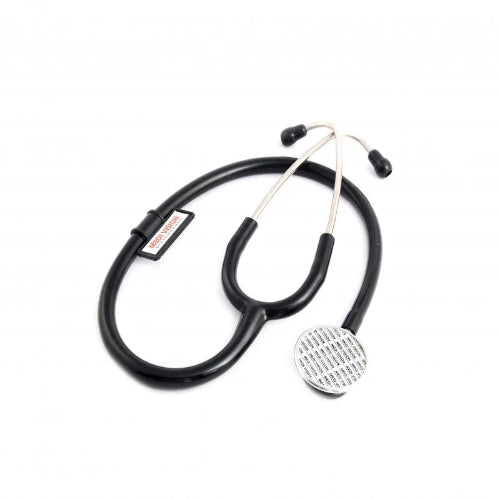
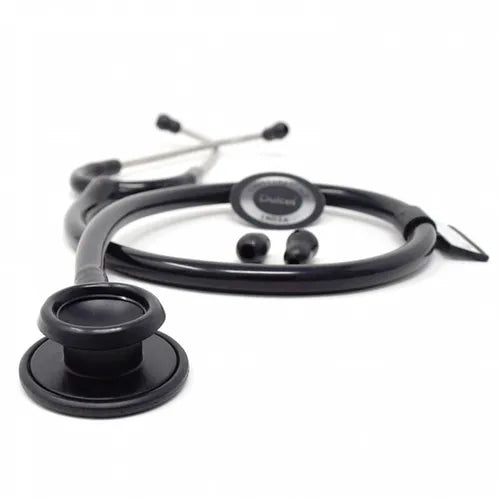
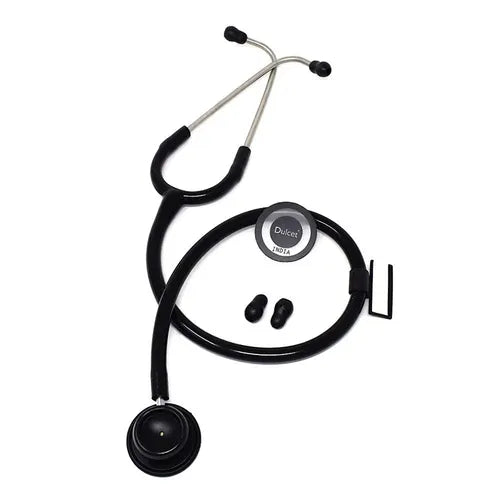
Dulcet Brace Chrome Stethospcope (Black)
Type: Stethoscope
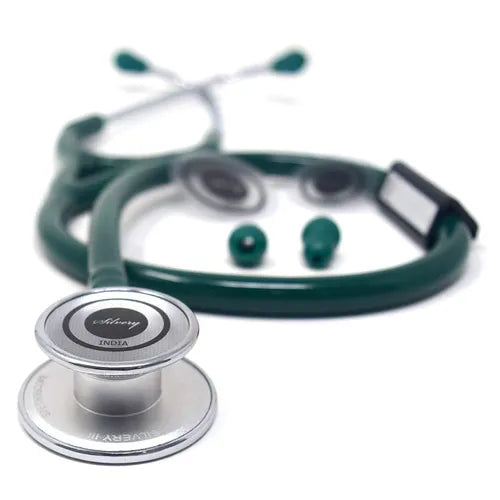
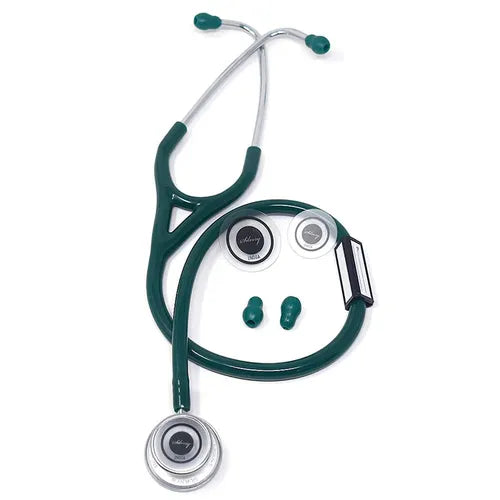
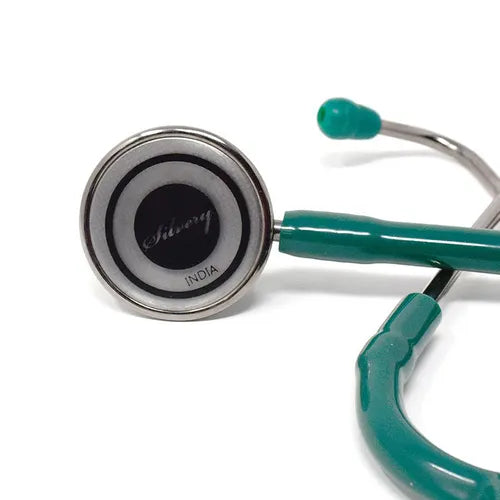
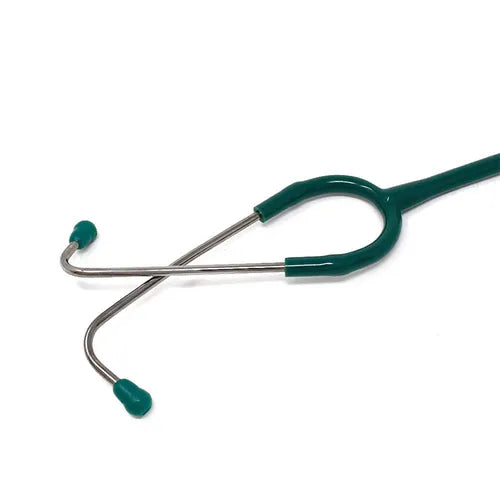
Silvery Aluminium Chrome Stethoscope (Green)
Type: Stethoscope
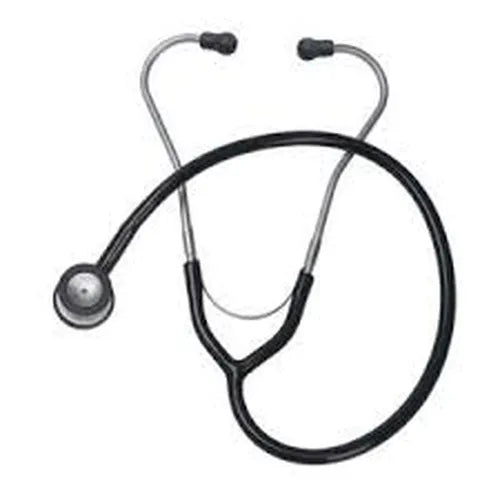
Stethoscope Deluxe
Type: Stethoscope
Silvery III SS Stethoscope (Blue)
Type: Stethoscope
Silvery III Aluminium Chrome SS Stethoscope (Green)
Type: Stethoscope
Silvery III Aluminium Chrome Stethoscope (Black)
Type: Stethoscopes
Pediatric Delux Stethoscope
Type: Stethoscope
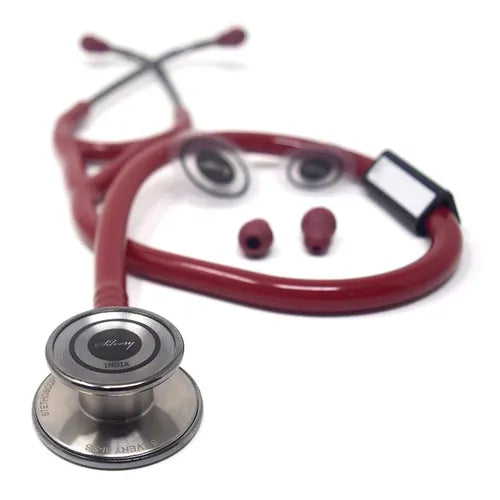
Silvery III SS Stethoscope (Red)
Type: Stethoscope
Silvery II-SS Stethoscope (Green)
Type: Stethoscope
Silvery II-SS Stethoscope (Black)
Type: Stethoscope
Silvery II-SS Stethoscope (Blue)
Type: Stethoscopes
Silvery III SS Stethoscope (Green)
Type: Stethoscope
Silvery III Aluminium Chrome SS Stethoscope (Grey)
Type: Stethoscope
Silvery Aluminium Chrome Stethoscope (Red)
Type: Stethoscopes
Dulcet SS Pediatric Neonatal Stethoscope
Collection:
Stethoscopes: Parts, Types & High-Performance Acoustic Guides
The Stethoscope: The Iconic Heart of Medical Diagnosis
The stethoscope remains the most recognizable symbol of the medical profession. Since its invention in the early 19th century, it has evolved from a simple wooden tube into a high-precision acoustic instrument capable of picking up the faintest murmurs of the heart and the subtle crackles of the lungs. For a healthcare provider, the stethoscope is more than a tool; it is an extension of their senses, bridging the gap between the patient’s internal physiology and the doctor’s diagnostic expertise.
In 2026, despite the rise of handheld ultrasound and digital imaging, the acoustic stethoscope remains the first line of defense in clinical assessment. Whether in a rural clinic or a high-tech ICU, the ability to perform a rapid, accurate auscultation—the act of listening to internal body sounds—is a fundamental skill that begins with understanding the instrument itself.
Understanding Stethoscope Parts: The Science of Sound Transmission
To appreciate how a stethoscope works, one must understand the intricate stethoscope parts that collaborate to amplify sound. Each component, from the earpieces to the chestpiece, is engineered to minimize acoustic loss and maximize clarity.
The Chestpiece: Diaphragm and Bell
The chestpiece is the part of the stethoscope that makes contact with the patient. Most high-quality clinical stethoscopes feature a dual-head design. The Diaphragm is the large, flat side of the chestpiece, designed to capture high-frequency sounds like heartbeats and breath sounds. Conversely, the Bell is the smaller, cup-shaped side, which is specialized for picking up low-frequency sounds, such as certain heart murmurs or bruits.
Stem and Acoustic Tubing
The Stem connects the chestpiece to the tubing. It is often rotatable, allowing the user to switch between the diaphragm and the bell. The Tubing itself is a critical part of the stethoscope; it must be thick enough to insulate the internal sound from ambient room noise while remaining flexible enough to drape comfortably around a clinician’s neck. In premium models, "dual-lumen" tubing is used, providing two separate sound channels within a single tube to enhance stereo-like sound quality.
Headset and Binaurals
The upper part of the stethoscope is the Headset, which consists of two Binaurals—the metal tubes that carry sound to each ear. These are typically spring-loaded to ensure a snug fit. At the ends are the Eartips, which must create an airtight seal in the ear canal. An airtight seal is non-negotiable; without it, the low-frequency sounds captured by the chestpiece will leak out before they reach the eardrum.
Specialized Stethoscopes for Diverse Clinical Needs
Not all stethoscopes are created equal. Depending on the specialty, a clinician might require a different set of acoustic properties. Pediatricians, for example, use stethoscopes with smaller chestpieces to fit the smaller surface area of a child's chest. Cardiologists often opt for "Master" series stethoscopes that feature pressure-sensitive diaphragms, allowing them to hear both high and low frequencies just by changing the amount of pressure applied to the chestpiece.
The 2026 market also sees a surge in Electronic and Digital Stethoscopes. These devices amplify sounds up to 40 times more than a traditional acoustic model and offer active noise cancellation. Some even connect to smartphone apps via Bluetooth, allowing clinicians to record heart sounds, visualize them as phonocardiograms, and share them for remote consultation.
Auscultation Mastery: Clinical Best Practices
Using a stethoscope effectively requires more than just placing it on the chest. The environment must be quiet, and the patient should be positioned correctly. For lung sounds, the diaphragm is moved across the back in a "ladder" pattern to compare the left and right lungs. For heart sounds, specific "auscultation points" are used to isolate the valves of the heart.
Maintenance and Longevity
To ensure your stethoscope lasts a decade or more, regular cleaning is essential. Eartips and diaphragms should be wiped with 70% isopropyl alcohol after every patient. Avoid exposing the tubing to extreme heat or prolonged direct skin contact, as skin oils can cause the PVC tubing to harden and crack over time.
Conclusion: Investing in Your Primary Diagnostic Partner
Choosing a stethoscope is a deeply personal decision for a healthcare provider. It is the instrument that will accompany you through thousands of patient encounters. By understanding the function of various stethoscope parts and selecting a model that suits your specific clinical environment—whether it be the legendary acoustics of a Littmann or the robust reliability of a Rossmax—you are investing in the quality of your patient care.
At MeddeyGo, we curate only the most trusted brands to ensure that when you listen, you hear the truth. Our 2026 collection features the latest in acoustic engineering and digital integration, supporting medical professionals in their mission to provide accurate, timely diagnoses.
Premium Diagnostics Starts with Premium Acoustics
Explore our range of clinical, cardiology, and digital stethoscopes. From student-friendly models to the gold standard in cardiology, find the perfect fit for your white coat.
The Physics of Sound: How a Stethoscope Amplifies Biology
The effectiveness of a stethoscope is rooted in the principles of acoustic physics. When the diaphragm is placed against a patient’s skin, body sounds cause the diaphragm to vibrate. These vibrations create acoustic pressure waves that travel through the airtight stethoscope parts—specifically the tubing and binaurals—directly to the user’s eardrums. Because the surface area of the diaphragm is much larger than the surface area of the ear canal, the sound energy is concentrated, resulting in the amplification that allows a clinician to hear internal physiological processes.
A critical advancement in modern stethoscopes is the "tunable" or pressure-sensitive technology. This innovation allows a medical professional to hear different frequency ranges without having to flip the chestpiece. By applying light pressure, the user can isolate low-frequency sounds (the bell function), while firm pressure allows the higher-frequency sounds to pass through (the diaphragm function). This seamless transition is essential in fast-paced environments like Emergency Rooms where every second counts.
Choosing the Right Tool: Pediatric, Infant, and Cardiology Models
In the diverse field of medicine, one size does not fit all. For healthcare providers specializing in neonatology or pediatrics, using an adult-sized chestpiece can lead to inaccurate readings because it is difficult to create a perfect seal on a smaller chest wall. Pediatric stethoscopes feature scaled-down stethoscope parts, including smaller diaphragms and bells, to ensure localized sound capture and patient comfort.
For cardiologists and critical care specialists, the requirements are even more stringent. Cardiology-grade stethoscopes are engineered with superior materials, often featuring stainless steel or specialized alloy chestpieces that offer better acoustic resonance than aluminum. These models frequently utilize double-lumen tubing to eliminate the "rubbing noise" common in standard single-tube models, providing the crystal-clear audio required to distinguish between complex heart valve disorders.
Material Matters: Durability Meets Comfort
Beyond acoustics, the longevity of a stethoscope depends heavily on material science. Modern tubing is typically made from "Next-Generation" PVC or synthetic materials that do not contain phthalate plasticizers or natural rubber latex. This is important not only for the safety of patients with allergies but also for the durability of the instrument. High-quality tubing resists skin oils and alcohol, preventing the stiffness and cracking that often plagues lower-quality models.
The ear-tips also play a silent but vital role. Snap-tight, soft-sealing ear-tips provide an excellent acoustic seal and a comfortable fit for the user during long shifts. Most professional stethoscopes come with various sizes of ear-tips to ensure a custom fit, as an improper seal is the leading cause of poor acoustic performance, even in the most expensive models.
Professional Insight: A stethoscope is often the first bridge of trust between a clinician and a patient. The physical act of auscultation—listening closely—signals a level of attentiveness that technology cannot replace. Maintaining the clinical integrity of your stethoscope parts through regular inspection and cleaning ensures that this diagnostic bridge remains strong and reliable.
The Digital Revolution: Smart Stethoscopes and AI Integration
As we progress through 2026, the traditional acoustic instrument is being augmented by digital power. Modern digital stethoscopes are designed to overcome the limitations of human hearing, particularly in high-noise environments like ambulances or busy emergency wards. These devices feature electronic amplification—often up to 40 times the volume of a standard model—and active noise cancellation technology that filters out ambient room chatter, allowing the clinician to focus solely on the patient's internal sounds.
The most significant leap, however, is the integration of Artificial Intelligence (AI). High-end digital models now synchronize with mobile applications to provide real-time visual waveforms of heart and lung sounds. Some AI algorithms can even assist in the early detection of heart murmurs or abnormal lung patterns by comparing the live audio against a vast database of clinical recordings. This ensures that even in primary care settings, the stethoscope parts are working alongside computational intelligence to provide a secondary layer of diagnostic confidence.
The Art of Auscultation: Mastering the Technique
Possessing a high-quality instrument is only half the battle; the other half is the technique of the practitioner. For a successful assessment, the eartips must be angled forward, following the natural path of the ear canal, to create the necessary airtight seal. Without this seal, ambient noise will leak in, and the low-frequency vibrations captured by the chestpiece will be lost.
When evaluating the heart, clinicians typically move the chestpiece through the four primary auscultatory areas: the aortic, pulmonic, tricuspid, and mitral valves. For lung assessments, the diaphragm is used in a "zig-zag" pattern across the chest and back, comparing the sounds of the left and right lobes symmetrically. A common clinical pearl is to ensure the patient remains still and silent, as even the friction of a stethoscope against chest hair or clothing can create "artifact" sounds that mimic serious respiratory issues.
SOP for Longevity: Protecting Your Investment
A premium stethoscope is a long-term investment that can last a decade if maintained according to professional standards. The most critical aspect of care is regular cleaning. Because the chestpiece is in direct contact with various patients, it must be wiped with 70% isopropyl alcohol after every use to prevent cross-contamination.
Equally important is the care of the acoustic tubing. Over time, constant contact with the oils of human skin can cause the PVC or synthetic tubing to become stiff and eventually crack. It is highly recommended to wear your stethoscope over a shirt collar rather than in direct contact with the neck. Additionally, avoid leaving your instrument in areas of extreme temperature—such as a hot car—as this can warp the diaphragm and compromise the acoustic integrity of the internal stethoscope parts.
Buyer’s Guide: Acoustic vs. Digital?
For students and general practitioners, a high-quality acoustic model remains the gold standard for reliability and ease of use. However, for specialists in cardiology or those working in telemedicine, a digital model offers the advantages of recording and amplification. At MeddeyGo, we offer a curated selection that spans from robust student models to the most advanced AI-integrated cardiology systems available in 2026.
Conclusion: The Ever-Reliable Diagnostic Companion
Despite the rapid advancement of medical technology, the stethoscope remains an irreplaceable part of the physical examination. It is the tool that facilitates the most fundamental clinical connection: listening. Whether it is the rhythmic thump of a healthy heart or the complex wheeze of a respiratory infection, the clarity provided by well-engineered stethoscope parts ensures that nothing is missed.
By choosing an instrument that balances acoustic sensitivity, ergonomic comfort, and long-term durability, you are not just buying a tool—you are selecting your most frequent diagnostic partner. Explore the 2026 MeddeyGo collection to find a stethoscope that resonates with your professional needs and clinical standards.
Precision Auscultation: Mastering the Anatomical Landmarks
The true value of high-quality stethoscope parts is only realized when the instrument is placed correctly. To perform a comprehensive cardiac assessment, clinicians navigate through specific anatomical landmarks known as auscultation zones. These include the Aortic area at the second intercostal space to the right of the sternum, the Pulmonic area to the left, and the Mitral area at the apex of the heart. Each zone requires a different level of acoustic sensitivity; for instance, the subtle "S3" or "S4" gallops associated with heart failure are best captured using the bell side of the chestpiece with very light pressure.
Respiratory assessments follow a similarly rigorous pattern. By moving the diaphragm in a symmetrical "ladder" sequence across the anterior and posterior chest, a practitioner can identify localized wheezing, crackles, or diminished breath sounds. In the high-noise environments of 2026, where digital distractions are everywhere, the physical act of focused auscultation remains the most reliable way to catch early signs of pneumonia or pulmonary edema before they escalate into emergencies.
Acoustic Troubleshooting: Why Can’t I Hear Anything?
It is a common frustration for medical students and even seasoned professionals to occasionally struggle with sound clarity. More often than not, the issue lies within a simple misalignment of the stethoscope parts rather than a mechanical failure. The most frequent culprit is the orientation of the headset. The binaurals must be angled forward—toward the bridge of the nose—to align with the natural forward curve of the human ear canal. If the headset is worn backward, the sound will strike the walls of the ear canal instead of the eardrum, resulting in a muffled or non-existent signal.
Another vital check is the "seal" of the diaphragm and the eartips. Even a microscopic crack in the PVC tubing or a loose-fitting diaphragm can cause significant acoustic leakage. If you are using a dual-head stethoscope, always ensure the stem is rotated to the correct side; a simple 180-degree turn of the chestpiece "opens" the acoustic channel for either the bell or the diaphragm. Regular inspection of the eartips for earwax buildup or debris is also essential, as even a small obstruction can drastically dampen high-frequency sounds.
Stethoscope FAQ: Expert Answers for Clinicians
Selecting and maintaining a stethoscope often brings up technical questions. Below are the most common inquiries addressed by our clinical specialists.
A double-lumen design (often found in cardiology models) features two separate sound channels inside one tube. This eliminates the "rubbing noise" created when two separate tubes touch each other, providing a much cleaner and more isolated sound for the listener.
In a high-volume practice, it is recommended to replace the diaphragm every 2 years, or immediately if you notice any warping, stiffness, or visible cracks. A compromised diaphragm is the leading cause of "diminished" acoustics in an otherwise functional stethoscope.
Generally, yes. Heavier materials like surgical-grade stainless steel provide better resonance and less "ambient interference" than lightweight aluminum. However, for clinicians who carry their instrument all day, a balance between weight and acoustic performance is key.
Final Thoughts: The Instrument That Defines Your Practice
The journey from a medical student's first breath sound to a specialist's complex murmur detection is mediated by the quality of their stethoscope. As we look toward the future of diagnostics in 2026, the blend of traditional acoustic excellence and digital augmentation continues to redefine what is possible at the bedside. By choosing an instrument with expertly engineered stethoscope parts, you are ensuring that your primary diagnostic sense—hearing—is never compromised.
MeddeyGo is proud to be the trusted partner for healthcare professionals across India. Whether you are seeking the unmatched precision of a Littmann Cardiology IV or the rugged durability of a Rossmax clinical model, our collection is curated to meet the highest standards of the medical fraternity. Listen with confidence, diagnose with precision, and provide the care your patients deserve.
MeddeyGo 2026 Stethoscope Collection
Authorized dealer for global brands. Nationwide shipping and full warranty support.