
Filter
4 products
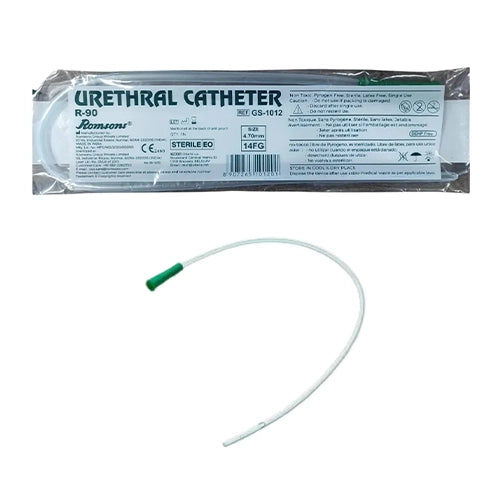
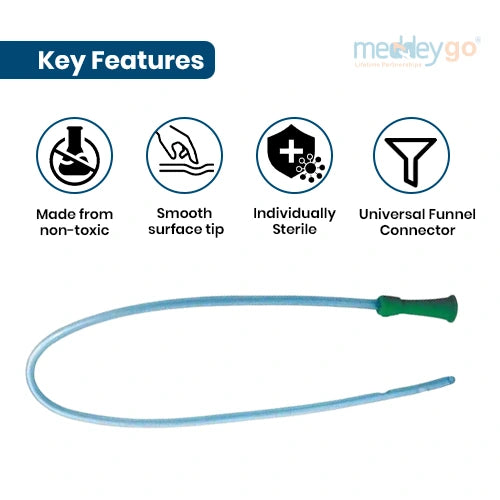
Type: Surgical
Romsons R90 Urethral Catheter (Pack of 25 )
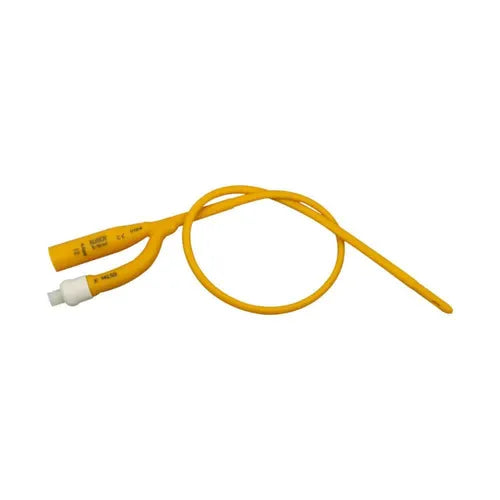
Type: Nursing
Rusch Gold Latex Foley Balloon Catheter

Type: Catheter
Ramsons R 90 Urethral Catheter
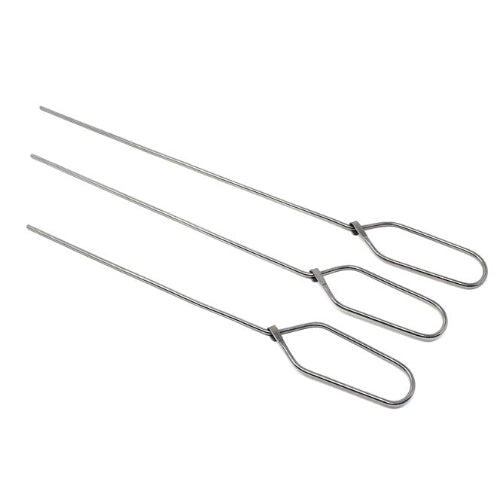
Type: General Instruments
Metal Catheter 12, 14, 16 Inch (Set of 3)
Collection:
Suction Catheter Uses, Sizes (Color Code) & Types
In the intensive care unit ( ICU ), during emergency response, or within long-term home care for the adult, the suction catheter is arguably the most vital tool for maintaining a "patent" (open) airway. When a patient loses the ability to cough effectively—whether due to sedation, neurological trauma, or chronic illness—secretions become a silent threat to life.
What Is a Suction Catheter? (Detailed Analysis)
A suction catheter , frequently referred to by clinical staff as a suction tube , is a medical-grade, flexible, and sterile tube designed to extract fluids from the human respiratory tract. Constructed primarily from medical-grade PVC or silicone, its primary design goal is to provide enough rigidity to be inserted into the airway without "kinking," yet enough flexibility to navigate the delicate bronchial tree without causing mucosal hemorrhage.
The device acts as the conduit between the patient's internal anatomy and a suction machine (aspirator). By applying negative pressure, the catheter draws out mucus, blood, saliva, or even aspirated vomit. For surgeons and nurses , the catheter is an extension of their ability to prevent "aspiration pneumonia"—a leading cause of mortality in hospitalized patients.
The Critical Necessity: Why Suctioning Is Important
The human body naturally clears its airway through the "mucociliary escalator" and the cough reflex. However, when these mechanisms fail, the physiological consequences are rapid and severe.
1. Prevention of Atelectasis
Secretions that remain in the lungs can block the small air sacs (alveoli), causing them to collapse—a condition known as atelectasis. Suctioning clears these "plugs," allowing for proper gas exchange.
2. Management of "Happy Hypoxia" and Silent Obstruction
In many post-operative cases, a patient may appear to be breathing but is slowly suffocating due to a buildup of thick saliva. Suctioning prevents the sudden drop in oxygen saturation ($SpO_2$) that can lead to cardiac arrest.
3. Reduction of VAP (Ventilator-Associated Pneumonia)
For patients on ventilators, secretions settle around the cuff of the tube. These fluids are a breeding ground for bacteria. Frequent, sterile suctioning is the gold standard for infection control in hospitals .
Clinical Applications: What Is a Suction Catheter Used For?
Beyond simple "clearing of the throat," suction catheters have highly specialized uses across various medical departments:
| Use Case | Clinical Description | Recommended Setting |
|---|---|---|
| Tracheostomy Care | Clearing secretions directly from the stoma (neck opening) to prevent tube blockage. | Home Care / Ward |
| Endotracheal Suction | Suctioning through an ET tube in sedated/ventilated patients. | ICU / OT |
| Oral/Nasal Clearance | Removing thick saliva or nasal blockages in infants or stroke patients. | Clinic / Pediatrics |
| Emergency Aspiration | Rapid removal of blood or vomit during trauma to prevent choking. | Ambulance / ER |
Benefit: Enhanced Patient Comfort
Proper suctioning doesn't just save lives; it significantly reduces "respiratory distress anxiety." Patients who feel they cannot breathe experience high levels of cortisol (stress) which slows down overall healing. A clear airway is the first step in effective rehabilitation by any physio or doctor.
The Trinity of Airway Clearance—Types & Applications
Differentiating Open, Closed, and Yankauer Suction Systems
Not all suctioning is created equal. The clinical environment—whether it is a sterile Operating Theatre (OT), a high-traffic ICU, or a patient's bedroom in home care—dictates which catheter type is safest and most effective. Below, we break down the three primary systems that every healthcare provider must master.
Open Suction Catheters: The Versatile Standard
The Open Suction Catheter (or Open Tracheal Suction System) is the most frequently utilized tool for short-term airway clearance. It consists of a single-use, sterile plastic tube that is manually inserted into the airway.
Clinical Mechanics: In an open system, the patient must be disconnected from their oxygen source or ventilator for the duration of the suctioning. This requires speed and precision. Because the catheter is exposed to the ambient air during insertion, strict aseptic techniques (sterile gloves and "no-touch" insertion) are mandatory to prevent introducing pathogens into the lungs.
Closed Suction Catheters: The ICU Gold Standard
Commonly known as "In-line Suction," the Closed Suction Catheter is integrated into the ventilator circuit. The catheter is encased in a protective plastic sleeve, allowing it to remain sterile while being used multiple times over a 24-to-72-hour period.
Why it's Superior for Critical Care:
- Continuous Ventilation: The patient does not need to be disconnected from the ventilator. This prevents "lung de-recruitment" (the collapse of air sacs) and maintains constant oxygenation.
- Infection Control: By keeping the system closed, the risk of healthcare-associated infections (HAI) and ventilator-associated pneumonia (VAP) is significantly reduced.
- Staff Safety: It protects the doctor and nursing staff from aerosolized secretions, which was a critical factor during the COVID-19 pandemic.
Yankauer Suction Catheter: The Rigid Oral Master
Named after the physician Sidney Yankauer, this is a rigid-tip suction device primarily used for oral suctioning . Unlike the flexible tracheal catheters, the Yankauer is designed to handle high volumes of thick fluids.
Surgical & Emergency Utility: The Yankauer is the "workhorse" of the OT. Surgeons use it to clear the operative field of blood and bone fragments. In emergency care, it is used to rapidly clear the mouth of a patient who is vomiting or bleeding heavily to prevent immediate aspiration. It features a bulbous head with multiple side holes (eyes) to prevent the tip from damaging delicate oral mucosa.
Technical Comparison of Suction Systems
| Feature | Open Catheter | Closed System | Yankauer |
|---|---|---|---|
| Flexibility | Highly Flexible | Flexible (Sleeved) | Rigid / Semi-Rigid |
| Duration of Use | Single Use (Dispose) | 24 – 72 Hours | Single Procedure |
| Ventilator Impact | Must Disconnect | Maintains Circuit | N/A (Oral Only) |
| Best For | Home Care / Wards | ICU / Critical Care | OT / Dental / ER |
⚠️ Warning: Tissue Trauma
Never use a rigid Yankauer tip for deep tracheal suctioning. Its rigidity is designed solely for the oral cavity; inserting it into the trachea will cause severe mucosal trauma and life-threatening bleeding.
Precision Sizing—The French Scale & Colour Codes
The definitive guide to Suction Catheter sizes for Adults & Pediatrics
Selecting the correct suction catheter size is one of the most critical skills for a respiratory therapist or nurse. If the catheter is too small, it will fail to remove thick secretions efficiently, prolonging the procedure and increasing patient distress. If it is too large, it acts as a "plug" in the airway, preventing air from entering the lungs while suction is being applied—leading to rapid desaturation.
The Science of Diameter: How to Choose the Right Suction Catheter Size
The golden rule for suction catheter size for adults and children is that the external diameter of the catheter should never exceed 50% to 60% of the internal diameter of the airway or tracheostomy tube. This ensures that while you are vacuuming out fluids, there is still enough space for air to move around the catheter, maintaining the patient's oxygen levels.
Standard Size Classifications (Measured in French/Fr):
- Neonates & Infants: 5 Fr to 8 Fr. At this stage, the airway is extremely narrow and the mucosa is very fragile.
- Children/Pediatrics: 8 Fr to 10 Fr. Selection depends on the child's age and weight.
- Adults: 12 Fr to 16 Fr. A 14 Fr catheter is the standard "go-to" for most adult patients in a hospital setting.
Visual Identification: Suction Catheter Size and Colour Code
In high-pressure emergency situations, reading small print on packaging is difficult. The international medical community uses a standardized colour-coded funnel connector system for instant identification.
| Size (French) | Colour Code | Typical Patient Category |
|---|---|---|
| 6 Fr | Light Green | Premature Infants / Neonates |
| 8 Fr | Light Blue | Infants and Small Children |
| 10 Fr | Black | Older Children / Small Adults |
| 12 Fr | White | Standard Adult (Moderate Secretions) |
| 14 Fr | Green | Standard Adult (Thick Secretions) |
| 16 Fr | Orange | Large Adult / Heavy Blood & Mucus |
Special Use Case: What is a Suction Catheter Number 16 used for?
The 16 Fr (Orange) catheter is the "heavy-duty" option. While a 12 or 14 Fr is sufficient for saliva and light phlegm, the 16 Fr is specifically reserved for:
- Post-Operative Hemorrhage: Removing thick blood clots from the airway after thoracic or oral surgery.
- Cystic Fibrosis/Severe Pneumonia: When secretions are extremely "tenacious" or "viscous" (glue-like) and cannot pass through smaller tubes.
- Emergency Resuscitation: Rapidly clearing the airway of a patient who has aspirated solid or semi-solid food particles.
Warning: Due to its large diameter, a 16 Fr catheter should only be used in large-bore tracheostomy tubes or wide adult airways to avoid significant trauma.
⚠️ Warning: The "Vacuum" Effect
Using a catheter that occupies more than 50% of the airway creates a total vacuum during suctioning. This can pull the air right out of the patient's lungs (residual volume), causing immediate lung collapse (atelectasis). Always size down if in doubt.
💡 Quick Tip: Measurement Formula
A simple clinical trick for tracheostomy patients: (Internal Diameter of Trach Tube - 2) x 2. For a size 8.0 tube: (8-2) x 2 = 12 Fr. This is the safest maximum size.
Anatomy of Precision & Safety Protocols
The Engineering of Airway Clearance and Step-by-Step Clinical Safety
A suction catheter may look like a simple plastic tube, but every millimeter is engineered for a specific physiological purpose. From the "Distal Eye" that prevents mucosal grabbing to the "Thumb Control" that regulates pressure, understanding the anatomy of your equipment is the first step toward clinical excellence in hospital or home care settings.
Mechanical Breakdown: The 4 Main Suction Catheter Parts
1. Funnel Connector
The universal interface. It is colour-coded for size and designed to create a "locked" airtight seal with the suction machine's connecting tubing.
2. Control Valve
The "Thumb Control." It allows the user to break the vacuum. Suction should only be active when the valve is covered during withdrawal.
3. Catheter Body
Constructed of low-friction PVC. It features a "frosted" or "satin" finish to slide effortlessly through ET tubes and nasal passages.
4. Distal Eye
Small lateral holes near the tip. They ensure fluid is pulled from multiple angles and prevent the tip from suctioning onto the airway wall.
The Gold Standard: How to Use a Suction Catheter Safely
Airway suctioning is an invasive procedure. Following a standardized protocol is essential to prevent secondary complications like bradycardia (slow heart rate) or trauma.
- Pre-Oxygenation: Always hyper-oxygenate the patient for 30–60 seconds before suctioning to provide an "oxygen buffer."
- Insertion (No Suction): Insert the catheter gently without applying suction. Advance until the patient coughs or you meet resistance.
- The 10-Second Rule: Apply suction only while withdrawing the catheter in a rotating motion. Total suction time should never exceed 10–15 seconds.
- Recovery: Allow the patient to rest and recover their oxygen levels for at least 1 minute between passes.
Clinical Pitfalls: Common Mistakes to Avoid
- Mistake 1: Deep Suctioning Routinely. Excessive depth causes "tracheal carinal" damage. Only go as deep as necessary to clear the blockage.
- Mistake 2: Using High Pressure. For adults, suction pressure should be between 100–120 mmHg. Higher pressure causes mucosal bruising.
- Mistake 3: Reusing Disposable Catheters. This is the #1 cause of lung infections in home care. Treat every open catheter as a single-use sterile item.
- Mistake 4: Suctioning on Insertion. This "scrapes" the airway lining and removes oxygen before you even reach the secretions.
Comparison of Quality Specifications
| Feature | Medical-Grade Standard | Low-Quality Warning |
|---|---|---|
| Tip Design | Soft, rounded atraumatic tip | Sharp, roughly cut edges |
| Material | Medical PVC (Kink-resistant) | Industrial plastic (Rigid/Brittle) |
| Side Eyes | Polished, smooth lateral eyes | Irregular holes that grab tissue |
Clinical FAQ Deep-Dive & Market Index
Advanced Troubleshooting for Respiratory Professionals
In complex respiratory management, a suction catheter serves as the primary mechanical intervention for airway patency when a patient's natural "tussive" (cough) effort is compromised. Beyond the simple removal of saliva, it is used to manage pulmonary hygiene in patients with advanced COPD, Cystic Fibrosis, or Neuromuscular disorders like ALS.
In these cases, secretions are not merely a nuisance—they are a physiological barrier to gas exchange. Thick mucus "plugs" can lead to lobar collapse (atelectasis), where an entire section of the lung stops participating in oxygenation. The catheter is used to navigate past the upper airway into the tracheobronchial tree to "harvest" these plugs. Furthermore, in emergency medicine, it is a diagnostic tool; the color and consistency of the suctioned material (e.g., pink frothy sputum in pulmonary edema vs. green purulent mucus in pneumonia) provide immediate clinical data to the doctor.
For patients with a tracheostomy, the catheter is their lifeline. Since the tracheostomy tube bypasses the nose and mouth (which normally humidify air), the secretions become much thicker and can "crust" inside the tube, leading to total airway obstruction. Periodic suctioning ensures that this artificial airway remains clear, preventing emergency re-cannulation or respiratory arrest.
Airway catheters are classified by their mechanical ecosystem and intended anatomical reach. The first and most common is the Open Suction Catheter. This is a single-use, sterile tube used in general wards and home care. Its design focuses on simplicity and "atraumatic" insertion. The "open" aspect refers to the fact that the airway must be opened to the atmosphere to use it, which is why aseptic technique is so critical to prevent cross-contamination.
The second is the Closed Suction System (Inline). This is the sophisticated ICU variant. It is housed in a protective plastic sheath and is physically connected to the ventilator circuit. This allows a nurse to suction a patient without disconnecting them from their oxygen supply. This is vital for patients with high PEEP (Positive End-Expiratory Pressure) requirements, as disconnecting them—even for 10 seconds—could cause their lungs to "de-recruit" or collapse, leading to a dangerous drop in oxygen levels.
The third is the Yankauer Suction Catheter. Unlike the first two, the Yankauer is rigid or semi-rigid. It is only intended for oral and pharyngeal suctioning. It excels at removing high volumes of blood, vomit, or thick saliva that a flexible catheter might struggle to catch. In the OT, the Yankauer is used to keep the surgical field clear, while in the ER, it is used during intubation to visualize the vocal cords by clearing out obstructing fluids.
The placement depth of a suction catheter depends entirely on the clinical objective. There are two primary techniques: Deep Suctioning and Shallow Suctioning. In shallow suctioning, the catheter is inserted into the tracheostomy or endotracheal tube to a depth just equal to the length of the tube itself. This clears the "artificial airway" without touching the sensitive tracheal tissue.
In deep suctioning, the catheter is advanced until resistance is met. This resistance is usually the Carina—the anatomical point where the trachea splits into the two main bronchi. Once resistance is felt, the catheter is pulled back 1–2 cm before suction is applied. This prevents the catheter from "grabbing" the carina, which can cause a severe vagal response, leading to a sudden drop in heart rate (bradycardia).
For nasopharyngeal suctioning, the catheter is passed through the nostril, along the floor of the nasal cavity, and down into the pharynx. This is common in pediatrics or for stroke patients who cannot swallow their saliva. Regardless of placement, the catheter should never be forced. If resistance is met early, it may indicate a mucus plug or a kink in the tube, requiring immediate evaluation by a physio or medical professional.
Top 5 Global Manufacturers of Suction Catheters
| Brand | Specialty | Key Product Series |
|---|---|---|
| Romsons | General Ward & Home Care | Romsons Romo-10 / GS-2002 |
| Medtronic (Covidien) | Closed ICU Systems | KimVent / T-Piece Systems |
| B. Braun | Hospital Grade Sterile Sets | Safe-T-Vac Series |
| Smiths Medical | Pediatric & Trach Care | Portex Suction Range |
| BPL Medical | Aspirators & Accessories | BPL Portable Suction Kits |
Authorized Medical Distributor
MeddeyGo.com is India's leading portal for verified respiratory care products. We supply clinics and hospitals with CE-certified, sterile suction solutions.