
Filter
3 products
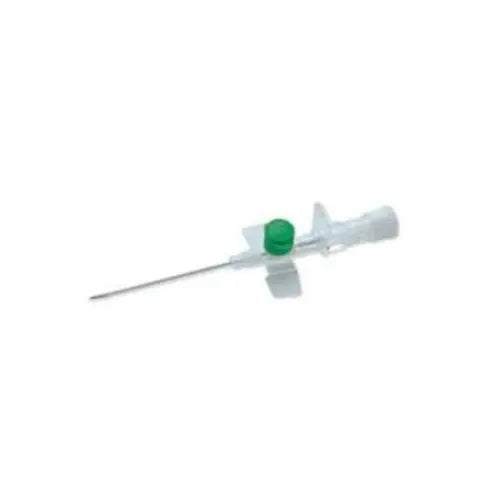
Type: Nursing
BD Venflon I.V. Cannula (Pack Of 20)
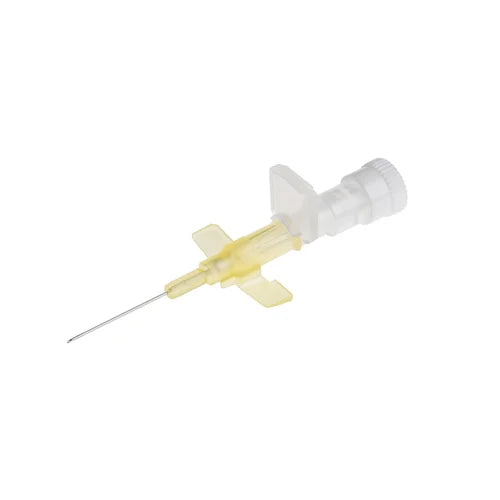
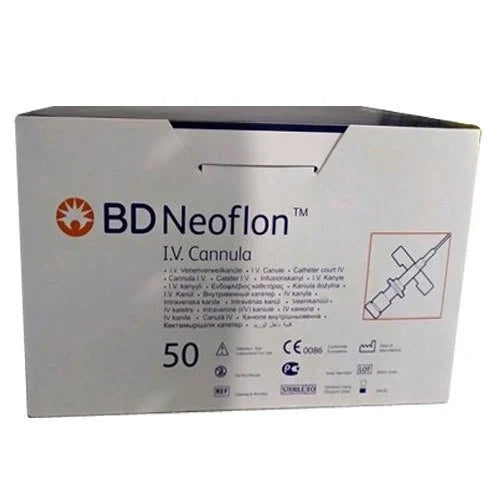
Type: Nursing
BD Neoflon I.V. Cannula (Pack Of 15)
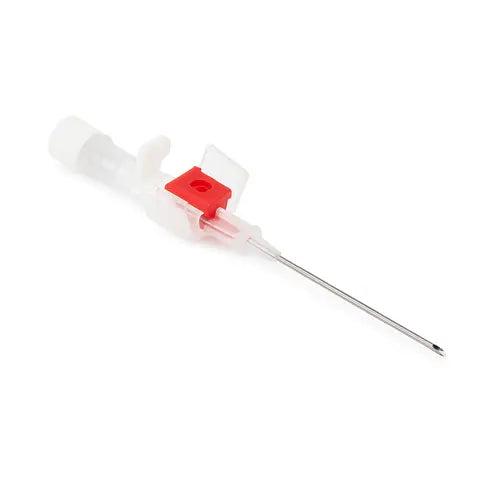
Type: Nursing
BD Arterial Cannula for Peripheral Arteries
Collection:
BD Venflon IV Cannula & Safety Kits | Best IV Cannula Price
Clinical Anatomy: Is a Cannula the Same as a Venflon?
In medical terminology, the terms are often used interchangeably, but there is a nuanced distinction. An IV cannula is the generic medical device used for the administration of fluids, medication, or blood products directly into the bloodstream. Venflon, specifically the BD Venflon™, is a world-renowned brand that has become a "proprietary eponym"—much like how people say 'Xerox' for photocopying.
When discussing venflon, we are referring to a peripheral intravenous catheter that typically includes an integrated injection port. This port allows for "bolus" medication delivery without interrupting the primary IV infusion. When you evaluate the cannula price, you are often paying for the engineering of the needle point and the material of the catheter (FEP or Polyurethane).
What is Venflon Used For?
The BD Venflon IV Cannula is designed to provide access to the peripheral vascular system. Its primary clinical uses include:
- • Hydration: Continuous delivery of crystalloid or colloid fluids.
- • Medication: Administration of antibiotics, analgesics, or emergency drugs.
- • Blood Transfusions: Using larger gauges (14G to 18G) for rapid volume replacement.
- • Sampling: Occasional blood withdrawal in emergency scenarios.
The Engineering of Access: Understanding Venflon Parts
A high-quality venflon is a masterpiece of medical engineering. Understanding the venflon parts is essential for successful "first-stick" insertion and avoiding common complications like phlebitis.
| Part Name | Technical Description | Clinical Importance |
|---|---|---|
| Stainless Steel Needle | Back-cut bevel geometry. | Minimizes insertion pain and vessel trauma. |
| Catheter Tip | Tapered PTFE or Polyurethane. | Ensures smooth transition from needle to vein. |
| Injection Port | Snap-cap color-coded port. | Allows needle-free bolus medication delivery. |
| Flashback Chamber | Transparent plastic housing. | Provides immediate visual confirmation of vein entry. |
| Luer Lock Cap | Universal threaded connector. | Secures IV sets or syringes to prevent leaks. |
Decoding the Colors: What is IV Cannula Size?
The universal color-coding system for IV cannulas ensures that medical staff can identify the flow rate at a glance. Venflon 22g, often referred to as the blue cannula, is one of the most common sizes in adult nursing.
In cannulation, the larger the Gauge number, the smaller the physical diameter of the tube. For example, a 14G cannula is much thicker than a 24G cannula.
| Color | Gauge (G) | Flow Rate (ml/min) | Ideal Use Case |
|---|---|---|---|
| Orange | 14G | 240 | Trauma, Massive blood transfusion. |
| Grey | 16G | 180 | Major surgery, Rapid fluid resuscitation. |
| Green | 18G | 90 | Blood transfusions, CT Contrast. |
| Pink | 20G | 60 | General IV fluids, Meds in adults. |
| Blue | 22G | 36 | Older adults, Small veins, Children. |
| Yellow | 24G | 20 | Pediatrics, Fragile veins. |
The Safety Shield: How BD Venflon Prevents Blood Exposure
In a high-pressure clinical environment, Needlestick Injuries (NSIs) and accidental blood exposure are significant occupational hazards. The BD Venflon Pro Safety is engineered specifically to mitigate these risks through a passive safety mechanism.
The moment the needle is withdrawn from the catheter, a protective shield automatically deploys over the needle tip. Unlike active systems, this requires no additional steps from the clinician, ensuring 100% compliance with safety protocols.
The catheter is made of a unique polyurethane material that softens up to 70% once inside the vein. This minimizes "mechanical phlebitis" and allows the venflon to remain in situ longer than standard Teflon catheters.
How does it prevent blood exposure?
Standard cannulas often result in a "blood splash" when the needle is removed before the IV set is connected. The BD Venflon design incorporates a multi-stage flashback system and a tight-tolerance seal that holds blood within the chamber until the Luer-lock is secured, significantly reducing the risk of cross-contamination and environmental soiling.
Patient Centricity: Is Venflon Painful?
The question "Is Venflon painful?" is the primary concern for most patients. Clinically, the pain associated with cannulation is dual-layered: the initial skin puncture and the advancement of the catheter into the vessel.
The BD Venflon IV Cannula utilizes a "Back-cut" needle geometry. Traditional needles have a simple slanted edge, but the BD needle is precision-ground at multiple angles to create a finer entry point. This reduces the force required for penetration, which directly correlates to a reduction in patient pain scores.
- Use a cannula 22 (Blue) for patients with low pain tolerance if the fluid requirements allow.
- Apply a topical anesthetic (EMLA cream) 30-45 minutes prior for elective procedures.
- Ensure the skin is pulled taut to stabilize the vein and prevent "rolling," which causes repeat punctures.
The Economics of Access: IV Cannula Price Analysis
For hospital administrators, the iv cannula price must be weighed against the "Total Cost of Care." While a generic cannula 22 might have a lower unit cost, high-end options like the BD Venflon Pro Safety reduce costs related to NSI treatments, repeat insertions, and thrombophlebitis management.
| Cannula Category | Est. Price Range (INR) | Value Proposition |
|---|---|---|
| Basic Peripheral Cannula | ₹25 - ₹55 | Lowest entry cost; suitable for short-term hydration. |
| Venflon with Port | ₹60 - ₹95 | Allows bolus injection; gold standard for ward use. |
| Safety Engineered (Pro Safety) | ₹150 - ₹280 | Passive needle protection; highest HCW safety. |
| Integrated Closed System | ₹450+ | Minimizes blood exposure; used in ICU/High-risk zones. |
Duration of Care: Can I Use Venflon for Long-Term IV Therapy?
One of the most frequent clinical queries is whether a BD Venflon IV Cannula is suitable for extended hospital stays. By definition, a Venflon is a **Peripheral Intravenous Catheter (PIVC)**. While it is highly durable, it is not designed for "long-term" use in the same way a PICC line or a Central Venous Catheter might be.
According to international CDC and Infusion Nurses Society (INS) guidelines, a peripheral venflon should typically be rotated or replaced every 72 to 96 hours to minimize the risk of catheter-related bloodstream infections (CRBSI) and phlebitis.
However, the BD Venflon Pro features **BD Vialon™ biomaterial**, which allows the catheter to soften and conform to the vein wall once inside the body. This advanced material technology has been shown to support longer "dwell times" with fewer complications compared to traditional FEP/Teflon cannulas. If a patient requires IV therapy for more than a week, clinicians should evaluate the transition to a Midline or Central line.
Precision Sizing: Adult vs. Pediatric BD Venflon Chart
Choosing the correct IV cannula size is a balance between the required flow rate and the health of the patient's venous endothelium. A blue cannula (22G) is often the "safe" choice for general wards, but emergency scenarios demand the high-flow capacity of an orange or grey tube.
| Gauge | Color | Length | Patient Demographic |
|---|---|---|---|
| 14G / 16G | Orange / Grey | 45mm | Adult Trauma / Operating Theater |
| 18G | Green | 45mm | Adult Surgery / Blood Transfusion |
| 20G | Pink | 32mm | General Adult Ward / Medications |
| 22G | Blue | 25mm | adult / Small Veins / Teens |
| 24G | Yellow | 19mm | Pediatrics / Neonates |
For pediatric care, the venflon 24g (Yellow) is the standard. It features a shorter catheter length to accommodate the smaller, more superficial veins of infants and children, reducing the risk of "blowing" the vein during insertion.
The Expert List: Top 5 Cannulas by Department
Based on clinical efficacy and cannula price efficiency, here is the MeddeyGo recommended selection for hospital procurement:
- ER & Trauma: 14G/16G BD Venflon (Orange/Grey) for massive fluid resuscitation.
- Labor & Delivery: 18G BD Venflon (Green) to ensure a high-flow line is ready for potential emergencies.
- General Medicine: 20G BD Venflon (Pink) — the most versatile "all-rounder."
- Geriatric Ward: Venflon 22 (Blue) to protect fragile, "papery" veins from trauma.
- NICU/Pediatrics: 24G/26G BD Neoflon™ for the most delicate vascular access.
Clinical Procedure: Step-by-Step Venflon Insertion
Successful cannulation with a BD Venflon IV Cannula requires both anatomical knowledge and tactile precision. The "First-Stick Success" rate is a key metric for nursing quality.
Complication Management: Navigating Difficult Access
Even with the best venflon, complications can occur. Clinicians must be able to differentiate between mechanical failure and physiological response.
| Issue | Probable Cause | Clinical Action |
|---|---|---|
| Hematoma | Needle went through the vein (Transfixion). | Remove cannula immediately; apply firm pressure for 2-3 mins. |
| Infiltration | Catheter slipped out of the vein into tissue. | Stop infusion; elevate the limb; apply a cold compress. |
| Phlebitis | Chemical or mechanical vein irritation. | Remove venflon; apply warm compress; document VIP score. |
| Resistance on Flush | Tip is against a valve or vessel wall. | Gently retract 1-2mm or ask the patient to adjust limb position. |
The Visual Infusion Phlebitis (VIP) score is a standard tool used to monitor venflon sites. A score of 2 or higher requires immediate removal and re-siting of the cannula.
First-Stick Confidence: Understanding BD Instaflash™
One of the reasons for the premium cannula price associated with BD products is the Instaflash™ technology. In standard cannulas, there is a delay between vein entry and blood appearing in the hub.
The BD Venflon needle incorporates a small notch near the tip. This allows blood to enter the space between the needle and the catheter immediately upon vessel entry. This "Immediate Flashback" gives the clinician the confidence to stop advancing the needle and start advancing the catheter, significantly reducing the risk of "blowing" or transfixing the vein.
The Grand Clinical FAQ: Expert Venous Access Insights
The venflon 22 strikes the perfect clinical balance between flow capacity and vessel preservation. At 36ml/min, it provides enough flow for most antibiotic regimens and maintenance fluids while maintaining a small enough footprint (25mm length) to fit comfortably in the smaller peripheral veins of adult patients or those with chronic illnesses. Using a blue cannula reduces the mechanical friction against the vein wall, which significantly lowers the incidence of chemical-induced phlebitis over a 72-hour period.
While both are used for infusion, a venflon is the "access device" that stays inside the vein (the portal), whereas an IV set (infusion set) is the "delivery tubing" that connects the fluid bag to the cannula. The BD Venflon IV Cannula is unique because it includes an integrated injection port, allowing clinicians to administer "push" medications via a syringe without disconnecting the IV set, thereby maintaining a closed, sterile system and reducing the risk of air embolism or contamination.
Yes, but gauge selection is critical. Contrast media is highly viscous and often delivered via a power injector. While a venflon 22g can handle slow hand-injections, power injectors typically require a minimum of a 20G (Pink) or ideally an 18G (Green) cannula. Using a gauge that is too small under high pressure can cause the catheter to rupture or the vein to "blow" (extravasation), leading to serious tissue damage. Always check the flow-rate specifications on the venflon packaging before connecting to a pressure injector.
To maintain patency and prevent thrombus (clot) formation at the catheter tip, a venflon should be flushed with 5-10ml of 0.9% Sodium Chloride (Normal Saline) every 8 to 12 hours if it is not in continuous use. Additionally, a flush must be performed before and after every medication administration. This "SAS" (Saline-Administer-Saline) technique ensures that no residual medication remains in the cannula 22 hub to react with subsequent drugs, which could cause precipitation and catheter occlusion.
A failed flashback typically occurs due to three reasons: 1) The needle has transfixed (gone through) the vein; 2) The patient is severely dehydrated or hypotensive, resulting in low venous pressure that cannot push blood into the chamber; or 3) The needle bevel is against a valve. The BD Instaflash™ technology in a BD Venflon is designed to mitigate this by showing blood immediately upon entry, but if it fails, clinicians should palpate for a "pop" and look for a slight swelling which indicates the needle is in the tissue rather than the lumen.
While the BD Venflon Pro is made of biocompatible Vialon™ that softens inside the vein, clinical guidelines generally recommend removal after 96 hours. Extending use beyond this increases the risk of "silent" phlebitis and bacterial colonization of the internal catheter track. However, in patients with "difficult access" where re-insertion is traumatizing, a venflon may be left in situ longer only if the site shows zero signs of redness, pain, or edema, and is monitored every shift using a formal VIP (Visual Infusion Phlebitis) score.
Professional Maintenance: Ensuring Cannula Longevity
Effective venflon management extends beyond insertion. Follow these daily maintenance "Golden Rules":
- ✅ Dressing Integrity: Ensure the transparent dressing is "occlusive" (sealed on all four sides). If the edges lift, the iv cannula is no longer sterile and must be redressed.
- ✅ Positive Pressure Flush: When finishing a flush, continue pushing the plunger while withdrawing the syringe or closing the clamp. This prevents blood from "back-flowing" into the tip.
- ✅ Hub Hygiene: "Scrub the hub" with an alcohol swab for 15 seconds before every access. The venflon parts, specifically the injection port, are high-touch areas for bacteria.
Conclusion: The Clinical Impact of Quality Cannulation
The BD Venflon IV Cannula remains the benchmark for peripheral access because it addresses the three pillars of infusion therapy: Patient Comfort, Clinician Safety, and Catheter Reliability. By choosing a high-grade venflon 22g or venflon 20g, healthcare facilities significantly reduce "re-start" rates and improve the overall patient experience.
Why Choose MeddeyGo for your Cannulation Needs?
Procuring medical disposables requires a partner who understands clinical stakes. MeddeyGo offers:
- Authenticity Guaranteed: We supply genuine BD Venflon and BD Venflon Pro Safety products with verifiable batch numbers.
- Transparent Pricing: Our iv cannula price and cannula price structures are designed for both individual practitioners and bulk hospital procurement.
- Size Availability: From the neonatal cannula 24 to the trauma-grade 14G, we maintain consistent stock of all color-coded sizes.
- Rapid Clinical Support: Our team ensures that your "Critical Care" supplies never run dry, with optimized logistics across India.
MeddeyGo: Supporting Clinical Hands with World-Class Medical Equipment.