
Skip to content

India’s Go to Platform for Medical Supplies Procurement

cervical and lumbar digital traction with 3 fold traction table

Type: Medansh

Cervical and Lumbar Digital Traction with 3 Fold Traction Table

Regular price Rs. 21,799
Sale price Rs. 21,799 Regular price Rs. 36,800
traction bed

Type: Occupational

Traction Bed Three Fold

Regular price Rs. 10,119
Sale price Rs. 10,119 Regular price Rs. 13,800
three fold traction bed

Type: Physio Beds

Three Fold Traction Bed – Manual Physio Table for Cervical & Lumbar Therapy

Regular price Rs. 10,119
Sale price Rs. 10,119 Regular price Rs. 13,800
cervical traction

Type: Modalities

Lumbar Traction Table Cervical Traction 4 Fold

Regular price Rs. 32,799
Sale price Rs. 32,799 Regular price Rs. 46,000
medansh digital cervical and lumbar traction

Type: Modalities

Medansh Digital Cervical and Lumbar Traction with 1 year warranty

Regular price Rs. 13,479
Sale price Rs. 13,479 Regular price Rs. 12,879
medansh digital cervical and lumbar traction

Type: Modalities

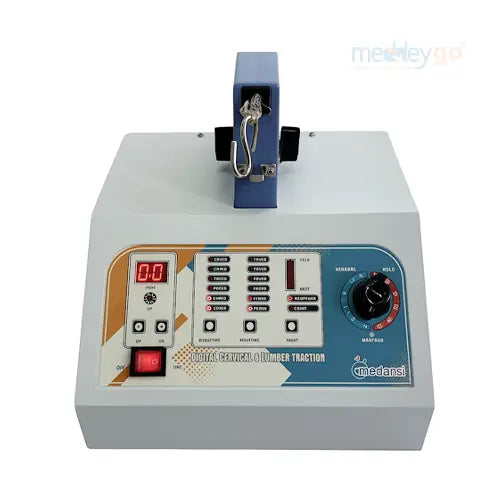
Medansh Digital Cervical & Lumbar Traction Machine

Regular price Rs. 13,499
Sale price Rs. 13,499 Regular price Rs. 19,000
Medansh Cervical Lumbar Digital Traction Machine Delux with 1year warranty

Type: Modalities

Medansh Cervical Lumbar Digital Traction Machine Delux with 1year warranty

Regular price Rs. 15,999
Sale price Rs. 15,999 Regular price Rs. 23,000
Medansh Cervical Lumbar Digital Traction Machine Delux with 1year warranty

Type: Modalities

Medansh Cervical & Lumbar Digital Traction Machine

Regular price Rs. 15,999
Sale price Rs. 15,999 Regular price Rs. 23,000
Medisheild Cervical Traction Massager with 1 year warranty

Type: Modalities

Medisheild Cervical Traction Massager

Regular price Rs. 17,299
Sale price Rs. 17,299 Regular price Rs. 0

Collection: Cervical Traction Machines & Guide | Professional Physiotherapy

Force Dynamics Effective cervical traction requires a force equal to roughly 10% to 15% of the patient's body weight to initiate vertebral separation.
Mode Selection Intermittent traction is the clinical preference for disc herniations, while static traction is traditionally used for muscle guarding.
Clinical Safety Modern traction machines must include a patient-operated emergency stop switch to prevent myogenic spasms or sudden discomfort.
Optimal Angulation For lower cervical segments (C5-C7), a traction angle of 25 to 30 degrees of flexion provides the most significant posterior distraction.

Spinal health management has evolved significantly with the integration of digital traction machine technology. For Doctors, Physiotherapists, and specialized healthcare providers, cervical traction and lumbar traction are no longer just supplementary treatments but core modalities for non-surgical spinal decompression. At Meddeygo.com, we provide professional-grade equipment that adheres to the highest biomechanical standards.

Cervical Traction: How and When to do it Manually vs. Mechanically

The decision to apply traction manually or utilize a cervical traction device is determined by the patient's neurological state and the clinical objective. Understanding the transition from hands-on assessment to machine-based therapy is vital for long-term recovery.

Manual Cervical Traction: The Diagnostic Standard

Manual traction is frequently the first step in a rehabilitation program. It allows the clinician to feel the "end-feel" of the tissue and monitor for immediate symptom centralization.

  • Clinical Indication: Acute radiculopathy where the patient's tolerance to force must be assessed second-by-second.
  • Technique: With the patient supine, the therapist cradles the occiput, ensuring the jaw is not compressed. A gentle, longitudinal pull is applied, often incorporating slight side-bending or rotation to identify the pain-free zone.

The Role of the Traction Machine in Physiotherapy

While manual therapy provides invaluable feedback, a traction machine for physiotherapy is required to achieve the sustained decompression needed to influence disc morphology. For conditions like chronic disc protrusion, a cervical traction machine offers:

  1. Sustained Force: Unlike manual therapy, a machine can maintain a precise 20-lb pull for 15 minutes without therapist fatigue.
  2. Digital Intermittency: Programmed "rest" and "hold" cycles promote fluid exchange and reduce the risk of muscle guarding.
  3. Reproducibility: Ensures the patient receives the exact same therapeutic dosage during every clinical visit.

Feature Comparison: Manual vs. Mechanical Traction

Feature Highlight Manual Traction Mechanical Traction Machine
Force Precision Estimated by Therapist Digital Accuracy (kg/lb)
Treatment Duration Limited (2-5 Minutes) Extended (15-30 Minutes)
Patient Safety Immediate Release Remote Hand-Held Switch
Best For Acute Assessment Chronic Decompression

Advanced Biomechanics 

In the clinical management of neck pain, cervical traction stands as a premier evidence-based modality. The primary objective is to facilitate the distraction of the vertebral bodies (C1 through C7), thereby reducing the pressure on the intervertebral discs and the exiting nerve roots. At Meddeygo.com, we recognize that effective traction is not merely about pull, but about the specific vectors of force applied to the delicate cervical architecture.

The Physics of Cervical Decompression: Optimal Angles for C5-C7

The efficacy of a cervical traction device is largely dependent on the angle of pull. While a neutral position may suffice for upper cervical issues, a significant portion of clinical cases involve the lower segments.

  • Upper Cervical Focus: A 0-15 degree angle is utilized to target the C1-C2 complex.
  • Lower Cervical Focus: To maximize distraction at the C5, C6, and C7 levels—where most herniations occur—the cervical traction machine must be set to an angle of 25 to 30 degrees of flexion.
  • Force Graduation: Clinicians at Meddeygo.com recommend starting with a 10-lb force and incrementing by 2-lbs per session to avoid myogenic guarding.

The Role of the Professional Cervical Traction Belt

A cervical traction belt is the critical bridge between the machine's motor and the patient's anatomy. If the belt is engineered incorrectly, the force is distributed to the mandible (jaw), which can cause Temporomandibular Joint (TMJ) dysfunction.

Achieving the Occipital Catch with Meddeygo.com Harnesses

Superior cervical traction requires the force to be concentrated on the occipital bone. Our professional-grade belts are designed with specific technical features:

Anatomic Contouring The harness "hooks" under the base of the skull, ensuring that 90% of the traction force is delivered to the spine rather than the chin.
Non-Slip Fastening High-tensile Velcro ensure that even at a 30-lb peak hold, the cervical traction device remains stable and secure.

Managing Radiculopathy with a Physiotherapy Machine for Neck Pain

When treating cervical radiculopathy (pinched nerve), the cervical traction machine provides a therapeutic window that manual therapy cannot sustain. By widening the neural foramen, the device allows for immediate reduction in arm pain and paresthesia.

Clinical Settings for Cervical Radiculopathy Management

Cervical Parameter Recommended Clinical Setting
Mode Configuration Intermittent (60s Hold / 20s Rest)
Initial Traction Force 10 - 12 lbs (4.5 - 5.5 kg)
Treatment Frequency 3 Sessions per week for 4 weeks
Patient Position Supine with 25° Neck Flexion

Professional Brand Analysis — Medansh vs. Technomed vs. Arrex

Selecting the right cervical traction machine for a hospital or private clinic requires an evaluation of motor reliability and programmable memory. At Meddeygo.com, we benchmark these units against international safety standards to ensure patient comfort during high-force decompression.

Technical Comparison: Top Professional Traction Units

Feature Medansh Digital Unit Technomed Autotrac 500
Traction Capacity Up to 60 kg (Standard) / 90 kg (Doubler) Up to 50 kg (Standard) / 90 kg (Doubler)
Traction Modes 8 Modes (Static, Intermittent, Progressive) Continuous and Intermittent
Memory Function 30 Programmable Treatment Patterns Microprocessor Based (Non-Programmable)
Safety Features Electronic Patient Stop + Acoustic Alert Patient Safety Switch (12V DC)

Clinical Longevity — Calibration and Maintenance Protocols

Investing in a physiotherapy machine for neck pain is a long-term capital expenditure. To maintain the accuracy of the force sensors, annual calibration is mandatory for clinics following JCI or NABH accreditation standards.

Ensuring Force Accuracy: The Calibration Workflow

Visual Inspection: Weekly checks of the cervical traction belt for frayed stitching and the traction cord for wear.
Dynamometer Testing: Using an external load cell to verify that a "20-lb" setting on the display equals 20 lbs of actual tension.
Electrical Safety: Verifying the integrity of the 12V patient safety switch to prevent any risk of electrical shock during therapy.

Market Insights — Traction Machine Price vs. Value

In 2026, the traction machine price in the Indian market reflects the shift toward digital, microprocessor-controlled units. While basic mechanical models may be available at lower price points, professional clinics should prioritize units with "Incremental Mode" to ensure a smooth increase in force.

Meddeygo.com Procurement Tip:

When evaluating the price of a cervical traction unit, always confirm if the package includes the essential accessories: The cervical harness, lumbar/pelvic belts, and the spreader bar. Standard digital units typically range from ₹14,000 to ₹28,000 depending on the number of programmable modes and the inclusion of a specialized traction table.

Step-by-Step Clinical Application — Professional Setup Protocols

The success of cervical traction is often determined in the first 120 seconds of patient setup. Precision in positioning ensures that the traction force is therapeutic rather than provocative. At Meddeygo.com, we advise a standardized four-point check for every session.

1. Patient Positioning and Comfort

The patient should be in a supine position with the knees slightly flexed to flatten the lumbar spine and reduce overall systemic tension. The head must be placed securely within the cervical traction device, ensuring the occipital pads are snug against the base of the skull.

2. Cervical Traction Belt Adjustment

Ensure the cervical traction belt is tightened sufficiently to prevent slipping, but not so tight as to cause discomfort at the mandible. The spreader bar should be level to ensure an even bilateral pull.

3. Machine Parameter Configuration

Input the prescribed force based on the clinical diagnosis. For a new patient using a traction machine for physiotherapy, start at the lower end of the therapeutic range (approx 10 lbs) and use a gradual ramp-up time to allow the muscles to accommodate the tension.

Evidence-Based Contraindications — When to Avoid Traction

Safety is the paramount concern for any Healthcare Professional. While a cervical traction machine is highly effective for discogenic pain, there are specific clinical "Red Flags" where traction is strictly contraindicated.

Absolute Contraindications
  • Spinal Malignancy or Tumors
  • Acute Spinal Fracture or Dislocation
  • Infectious Diseases (Pott’s Disease/Osteomyelitis)
  • Severe Osteoporosis
  • Vertebrobasilar Insufficiency
Relative Contraindications
  • Acute Muscle Strain/Sprain
  • Pregnancy (Specifically for Lumbar Traction)
  • Claustrophobia
  • Hiatal Hernia
  • Uncontrolled Hypertension

The market for a physiotherapy machine for neck pain is shifting toward hybrid care. While the heavy-duty mechanical distraction remains a clinic-bound procedure, many doctors are now prescribing lightweight cervical traction kits for home maintenance.

The Meddeygo.com Hybrid Care Model

By combining in-clinic sessions using a professional lumbar traction machine with daily home use of a cervical traction belt, patients report faster pain centralization and improved long-term adherence to rehabilitation protocols.

Clinical Outcomes — What the 2024-2025 Research Says

Recent longitudinal studies conducted in 2024 and early 2025 confirm that cervical traction, when combined with active stabilization exercises, significantly outperforms exercise alone for short-term pain reduction. Research highlights a mean reduction in Numeric Pain Rating Scale (NPRS) scores of 17.8% more in traction-integrated groups. For the modern physiotherapist, this data reinforces the cervical traction machine as a primary intervention for rapid symptom centralization.

Professional FAQ: Spinal Traction Clinical Standards

Q1: How long should a single cervical traction session last?
Clinical protocols generally recommend 10 to 15 minutes for acute conditions. Extending sessions beyond 20 minutes has not shown additional therapeutic benefit and may lead to post-treatment muscle soreness.
Q2: Can cervical traction be used for someone with a TMJ disorder?
Standard chin-halter belts are contraindicated for TMJ patients. However, a specialized cervical traction belt that uses occipital-only pressure (pulling from the base of the skull) is safe and effective for these individuals.
Q3: What is the "Vacuum Effect" in spinal decompression?
The vacuum effect refers to the negative intradiscal pressure created during the hold phase of a traction machine. This pressure gradient encourages the retracted movement of a bulging nucleus pulposus back toward the center of the disc.
Q4: Is a "clicking" sound normal during therapy?
While minor joint cavitations (popping) can occur, any sharp "click" accompanied by pain should result in an immediate stop using the cervical traction device's safety switch and a re-evaluation of the harness fit.

Conclusion: Elevating Standards in Spinal Care

As spinal pathologies become more prevalent due to sedentary lifestyles, the demand for precision traction machine technology is higher than ever. By adhering to the biomechanical and safety standards outlined in this guide, clinicians can provide safe, predictable, and life-changing results for their patients.

Why Choose Meddeygo.com for Your Spinal Care Equipment?

Clinical Vetting

Every cervical traction machine on our platform is curated by industry veterans. We don't just sell equipment; we provide tools that have been tested in real-world Indian clinical environments.

Smart Pricing & Transparency

We provide the most competitive traction machine price in India without compromising on quality. With clear GST invoicing and bulk-buy options, we empower clinic owners to scale sustainably.

End-to-End Support

From the initial installation of your traction machine for physiotherapy to annual calibration checks and spare part availability (belts, pulleys, cords), Meddeygo.com is your long-term partner.